
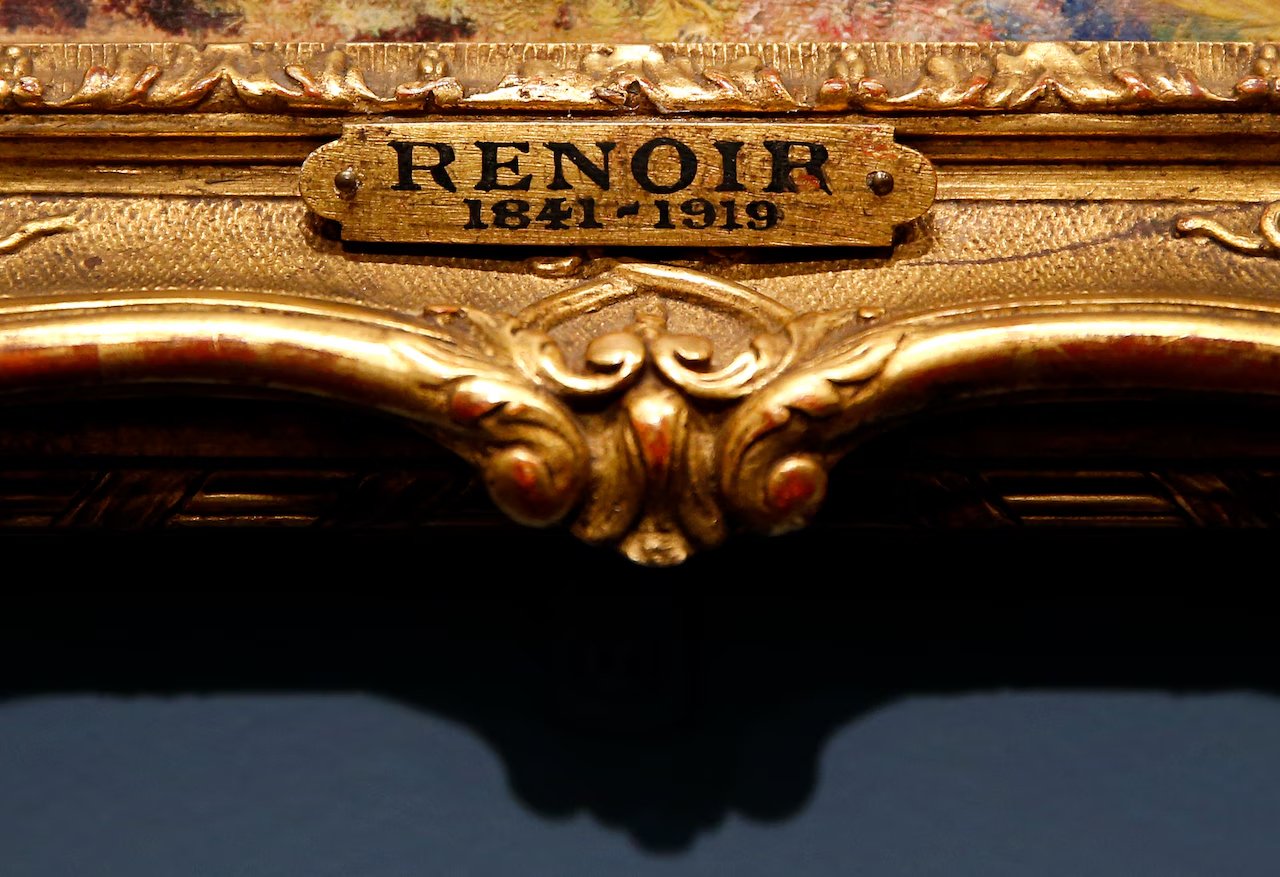
Sometime between the night of March 22nd and the early hours of March 23rd, four hooded men forced open a door at the Magnani Rocca Foundation — a private villa set in the Parma countryside, 12 miles outside the city — and walked out with a Renoir, a Cézanne, and a Matisse. The whole operation took three minutes. CNN The alarm sounded. They crossed the gardens anyway. Then they were gone.
The three works — Les Poissons (1917) by Renoir, Still Life with Cherries (c. 1890) by Cézanne, and Odalisque on the Terrace (1922) by Matisse — were housed in the Hall of the French on the villa's first floor. The Art Newspaper They are worth millions. They are also, as of this writing, completely unsellable.
And that is precisely the point.
Forget the romantic fantasy of the gentleman thief slipping a Renoir behind the sofa in his Zürich penthouse. These are not paintings you hang in a hallway. They are not paintings you quietly move through a back-channel auction. Art recovery specialist Christopher Marinello noted that the criminals, having clearly cased the building in advance, will be looking to cash out quickly The Art Newspaper — but the avenues for doing so are nearly nonexistent through legitimate markets. Every major auction house, dealer, and serious collector on the planet will have these works flagged within 48 hours.
So what's the play? A few possibilities worth considering:
The Ransom Route. This is the most likely scenario. The paintings aren't sold — they're held. The thieves approach the foundation or its insurers and offer the works back for a fraction of their assessed value. It's technically illegal, insurers hate it, and it happens more than anyone admits.
The Collateral Play. High-value stolen art has long served as currency in criminal networks — used as collateral in drug deals or as a bargaining chip with law enforcement in unrelated prosecutions. The paintings don't need to be sold. They just need to exist, somewhere, in someone's possession.
The Commission Theory. An obsessive private collector — one with no interest in provenance and every interest in owning a Matisse — may have ordered the theft directly. The market for this kind of arrangement is small but not fictional.
The Political Leverage Angle. The heist bears similarities to the robbery that targeted the Louvre in Paris last October. Euronews: Whether that's coincidence or coordination is a question Italian investigators will be asking seriously.
The museum believes a structured, organized gang was responsible. NBC News: No arrests have been made. The foundation kept the theft secret for a full week, hoping the thieves might return.
They didn't. Who knew?
One final note, for the record: Thomas Crown is not a suspect. He has an alibi, excellent taste, and would never have triggered the alarm.
[Link]