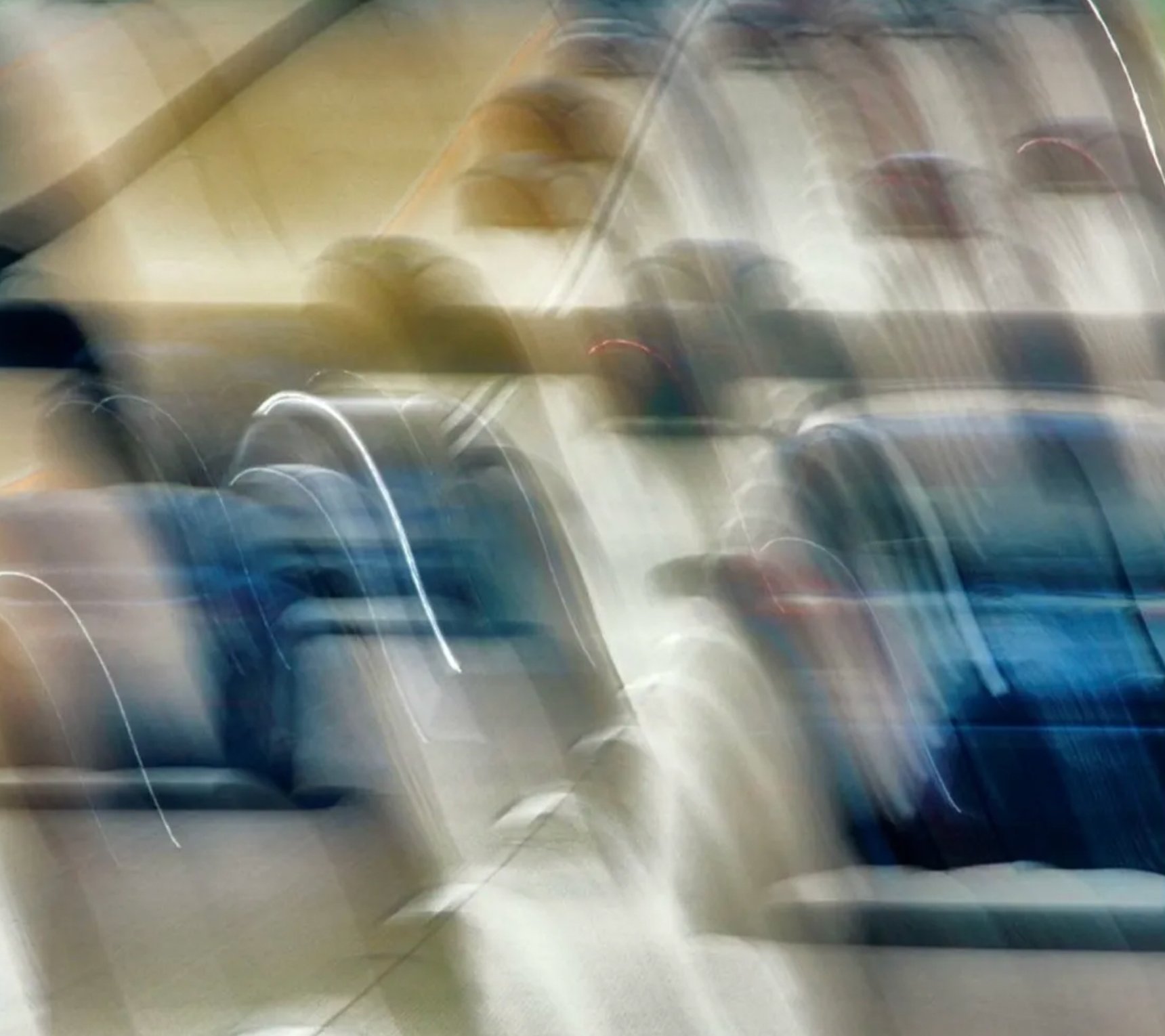
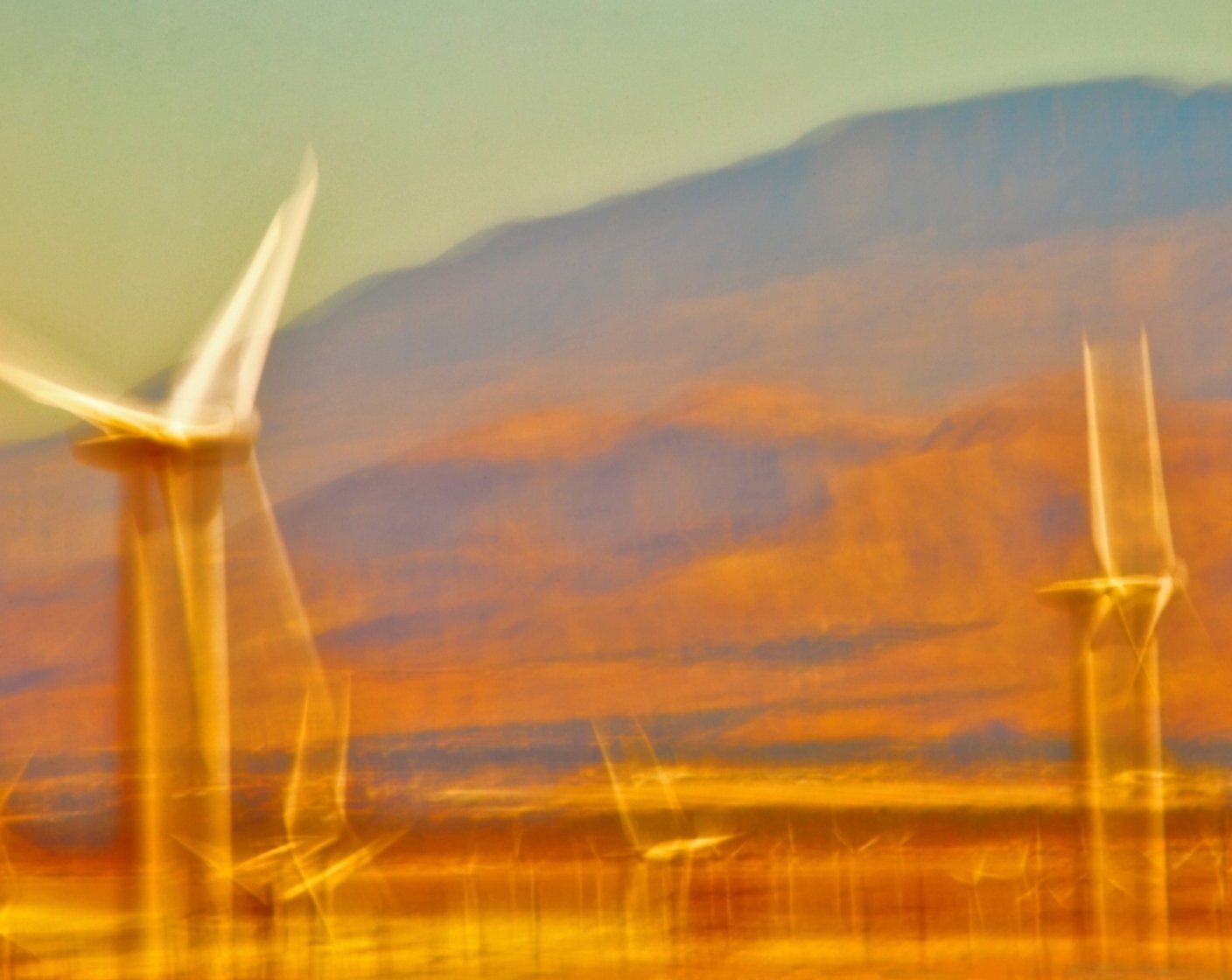
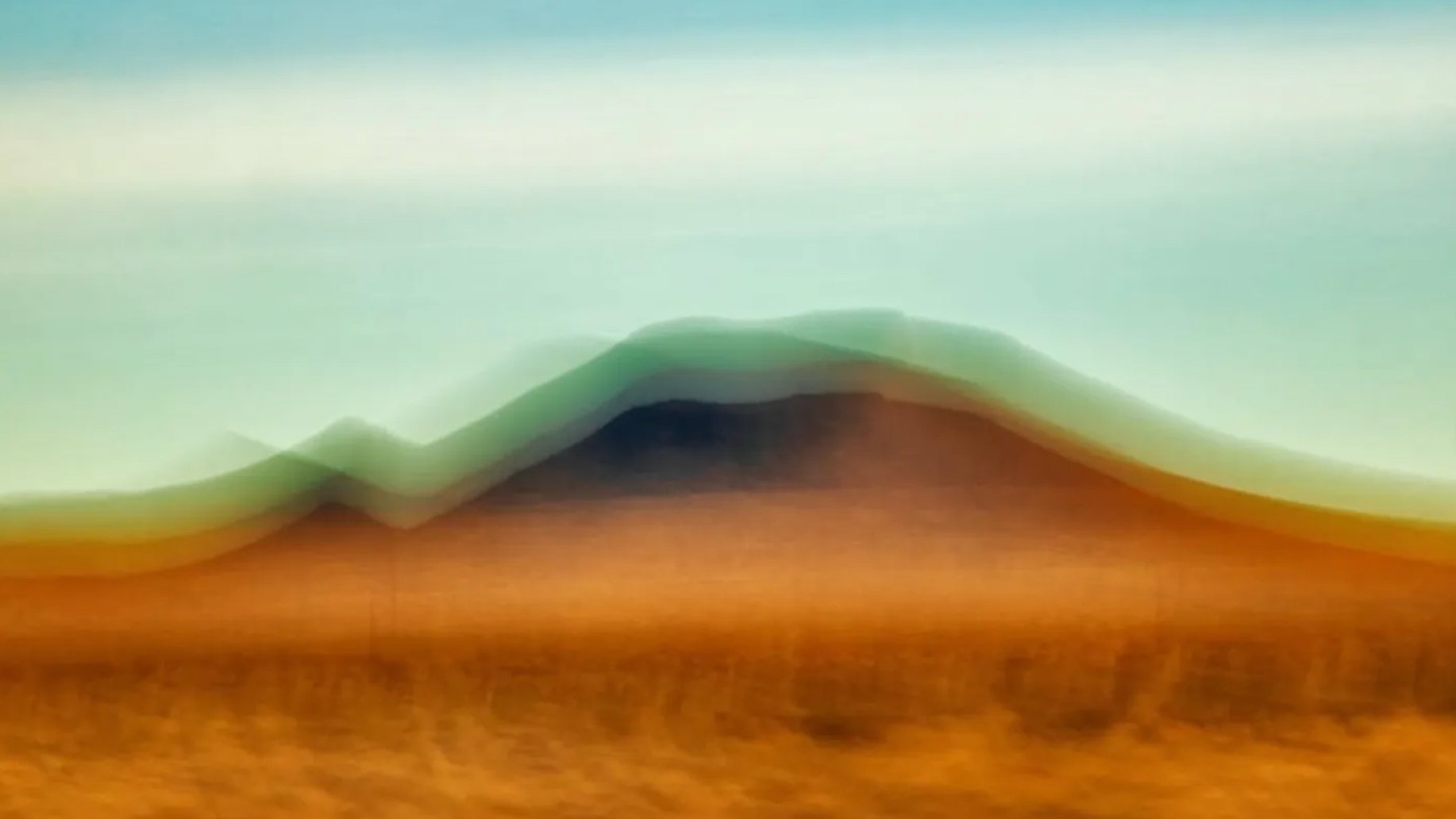
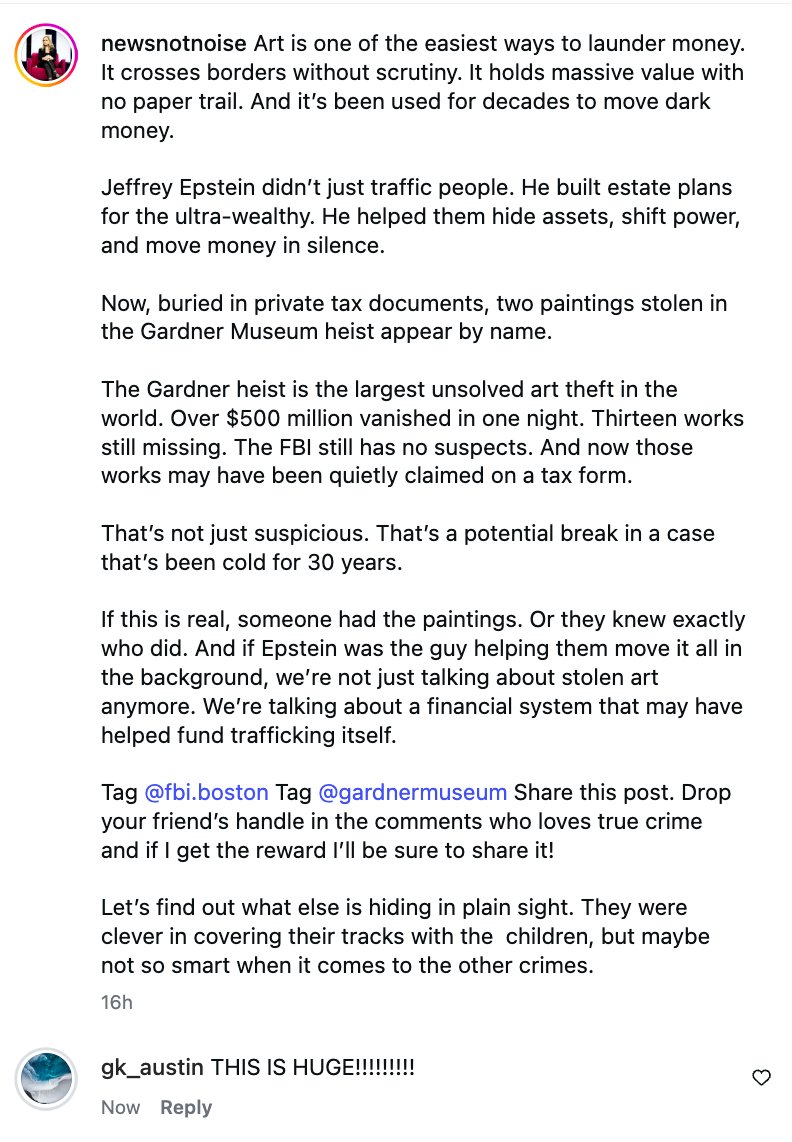
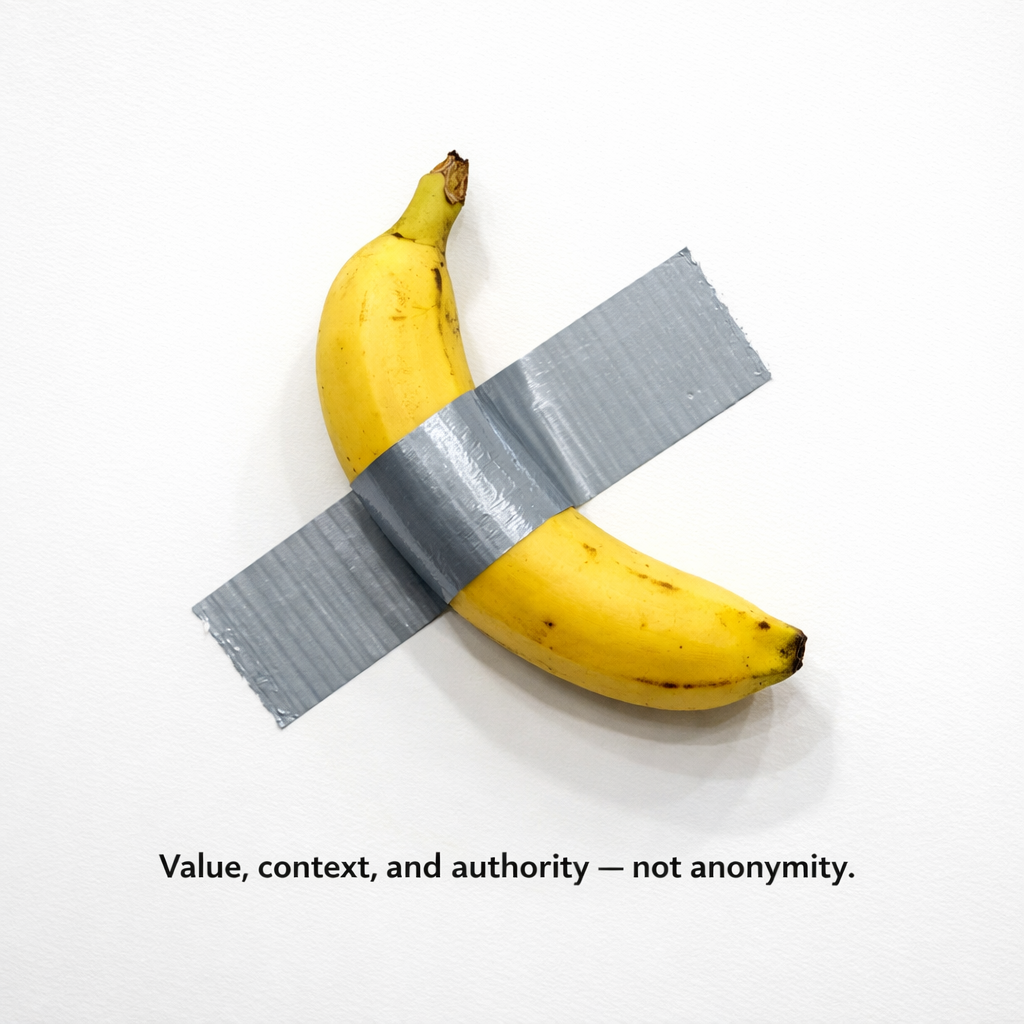
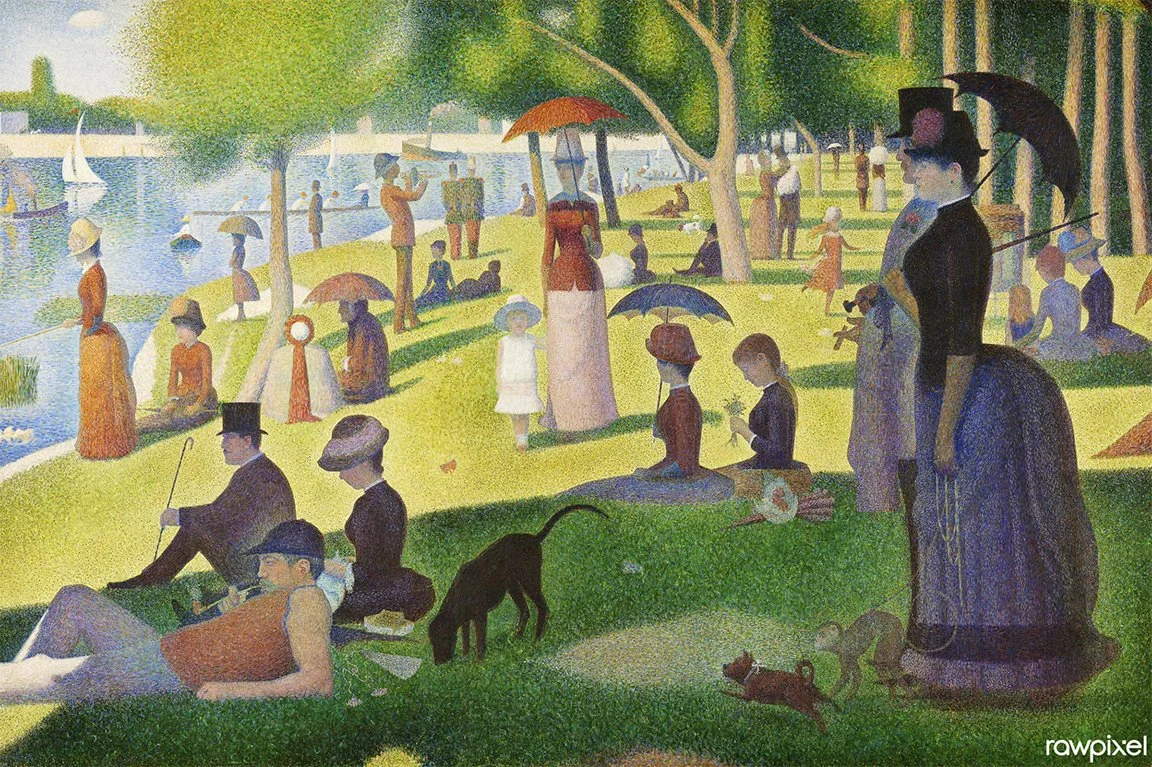
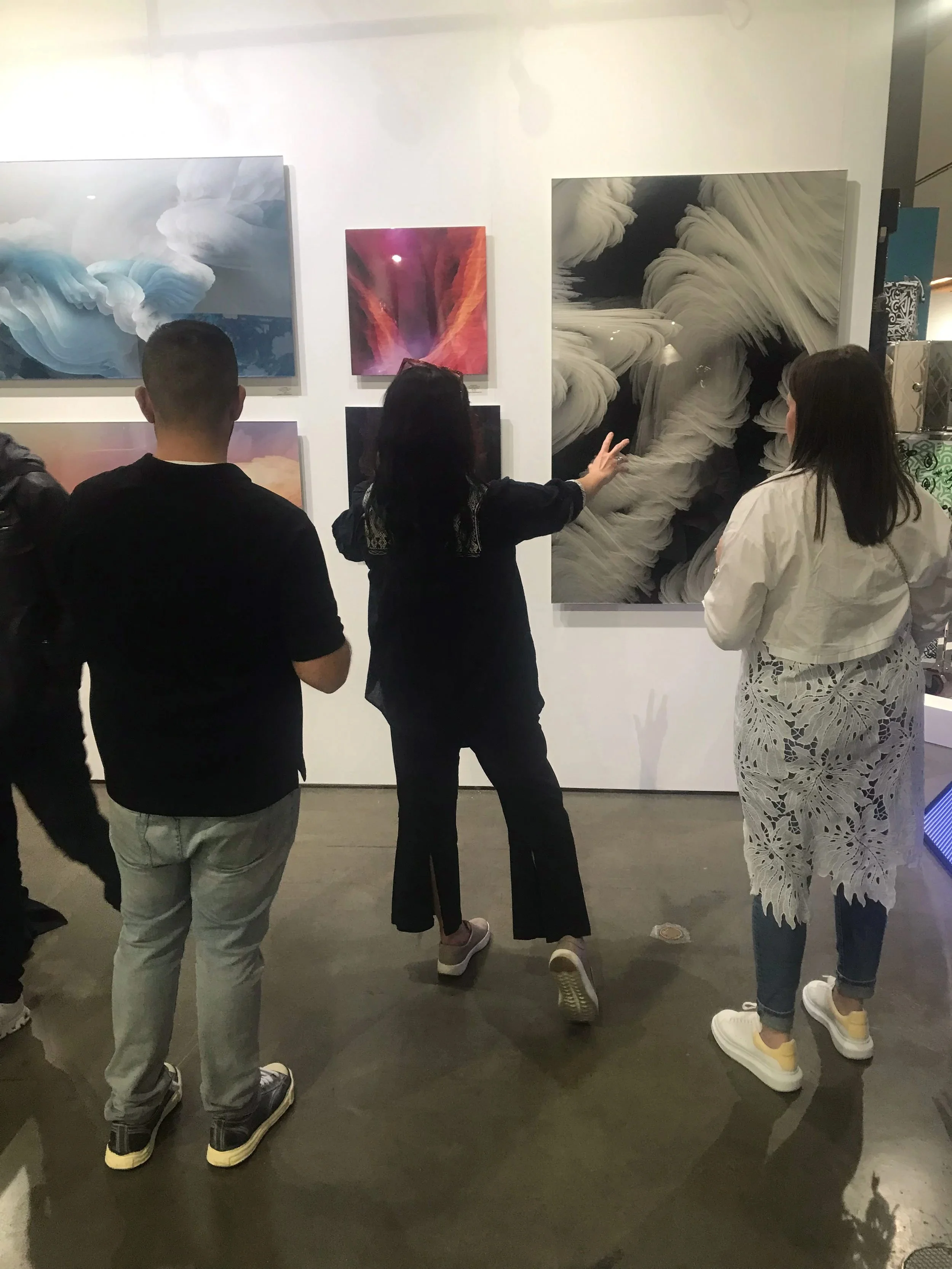
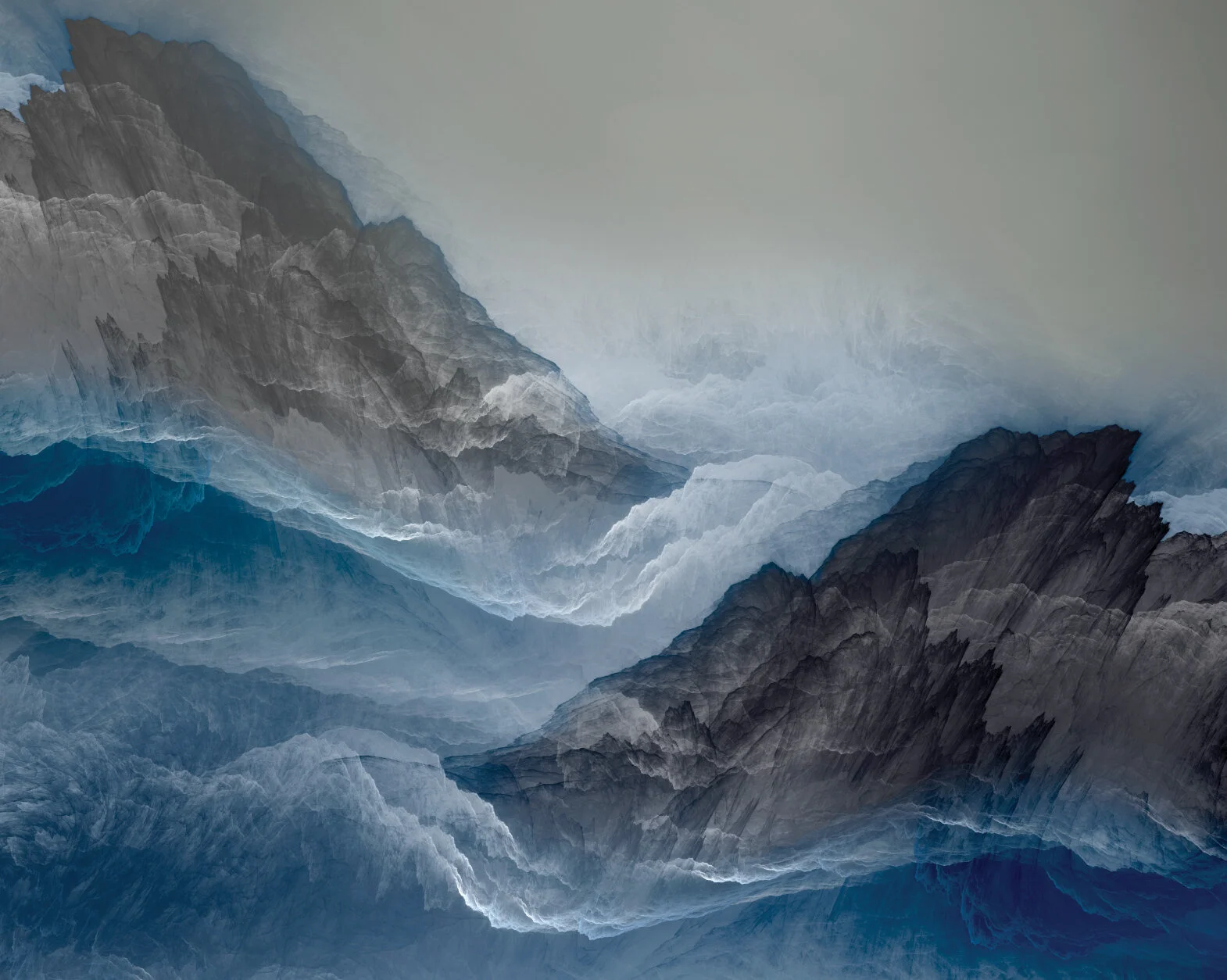
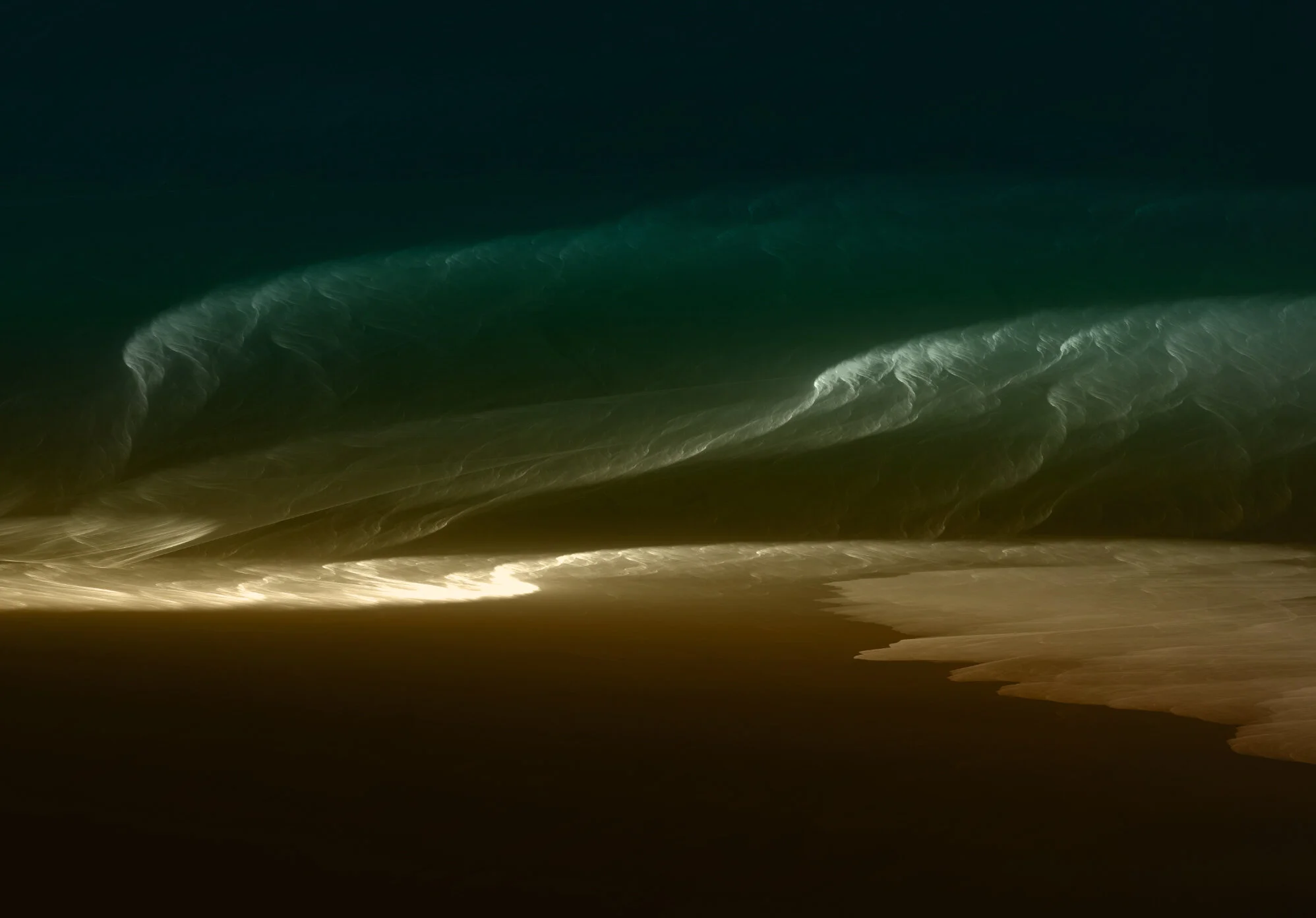
…Is showing your work and seeing how people react. The year 2025 was very good to me creatively and more. I sold 8 pieces, and gave away three or four. A few of my pieces are now living in Asia, and one is in London; all of them are moderately big pieces, too. In a couple of days, it's the new year, and back to work I go. I have studying JW.M. “fog-scapes,” and I might do some sunrises as he did, but in my own way, that is. I want everyone to have an affluent year and make many friendships. I love you all!
YES! — The Art Market Is Changing — Artists and Collectors Are Growing Closer, and That’s How It Should Be /
The latest Art Basel and UBS Global Art Market Report shows that the art world is at a turning point — not simply because sales figures dipped, but because the structure and dynamics of collecting are evolving in ways that benefit artists and the larger cultural ecosystem. The narrative of a “market crash” is an easy headline, but the deeper shifts are far more interesting and far more promising than most analysts are letting on. Art Basel+1
In 2024 the total global value of art sales declined roughly 12%, down to about $57.5 billion. On the surface that sounds dire, but look closer and the pattern tells a much richer story. Sales by value dropped largely because the high-end segment — especially works above $10 million — saw a sharp contraction, while overall transaction volume actually grew by about 3%. There were more sales, not fewer, just at different price levels than before. Art Basel+1
This is important. A market dominated by mega-sales at auction doesn’t tell us about the health of the creative ecosystem. Those trophy sales mostly reflect a very small group of ultra-wealthy players and are highly sensitive to economic conditions. The fact that total transactions increased — and that the lower-priced segments continued to gain momentum — shows that a broader base of collectors is participating. Those are the kinds of buyers who don’t just buy a painting as a financial asset; they buy because they feel the work, they engage with it, and they live with it. Artsy
What’s more, the surge in smaller dealers’ sales and the stability of online channels means that art is being discovered and transacted in more decentralized ways than ever before. Smaller dealers (with annual turnover under $250,000) experienced some of the strongest sales growth as a segment, and online sales — although slightly down from their peak — remain far above pre-pandemic levels and have become a key entry point for new buyers. Artsy
To artists, this shift should feel familiar. It mirrors how art emerges in a culture — not from isolated elite tastemakers, but from many individual relationships between creation and perception. If collectors become more numerous, more diverse in taste, and less dependent on million-dollar benchmarks, then the mechanism of value becomes more directly tied to the work itself, not just to its trophy status. In other words, it brings the market closer to the artists and their audiences, rather than further away behind institutional opacity.
Where some reports emphasize how Gen Z and younger collectors are still a minority with substantial means, the more useful interpretation may be that these newer collectors are reshaping the pathways by which art is discovered and valued, even if they aren’t yet the dominant spending cohort. They are not just buying what the galleries tell them to buy; they are discovering art through digital platforms, communities, and word-of-mouth. In this sense, the way art travels is becoming more horizontal rather than vertical — closer to direct engagement between creator and viewer. Artsy+1
Another notable trend is the rising role of women collectors. Several analyses of the UBS/Art Basel research find that women are not only spending more on art than men on average but are also more likely to buy works by artists they don’t already know. This is not insignificant. Gender diversity in the buyer base can help diversify the kinds of art that get supported — bringing new voices, new styles, and new ideas into the marketplace. United States of America
Taken together, these shifts — more transactions at accessible price points, stronger engagement with smaller dealers, digital discovery channels, and more diverse buyers — suggest that the art market may be democratizing its mechanics even as it contracts at the very top. That’s no small thing. It means the power to shape taste and cultural capital is beginning to shift away from a handful of elite gatekeepers toward a broader network of collectors and creators. That’s good for artists. It’s good for culture. And it’s precisely how a living, breathing ecosystem grows. Artsy
Of course, caution is still warranted. A market with fewer high-end sales can feel discouraging to big galleries and auction houses that depend on blockbuster results. But if the market recalibrates toward meaningful engagement rather than spectacle, then the conditions for artistic flourishing improve. Artists are not measured solely by million-dollar price tags; they are measured by how often their work connects, changes minds, and enters lived experience. And if more collectors — young or old, cautious or confident — are participating with that mindset, then the future of art is not shrinking. It is realigning. Art Basel
The UBS/Art Basel data may look like a bearish market at first glance, but the real takeaway is that sales value is only one dimension of health. The qualitative shifts — more diverse buyers, growth at grassroots price points, and a digital infrastructure that bypasses traditional gatekeeping — point to a more interconnected future between artists and collectors. In that sense, the art market is not collapsing; it’s maturing.
SUPER CRITICAL LIQUID — WHERE WATER BECOMES ORIGIN /
Before Super Critical Liquid became a series of paintings, it began with a simple thought:
Water is the quiet architect of everything alive.
We forget this, because water is everywhere — in our bodies, our memories, our oceans, our storms — but nothing on Earth exists without it. Carbon and water are the co-conspirators of life. One provides the structure, the other provides the medium. When they meet, things happen: cells form, chemistry wakes up, life begins to sketch itself into being.
That’s why I wanted to understand water when it reaches its most intense state — the moment where it stops behaving like “just water” and becomes something transformative. Scientists call that moment super critical liquid. I think of it differently:
It’s the threshold where matter becomes possibility.
Water: The First Home of Life
Every ocean wave is older than civilization.
Every drop of rain is recycled from ancient seas.
Every living thing on Earth traces its lineage back to water.
Life didn’t begin in soil or air — it began in the deep.
Water held us, protected us, and gave us room to experiment. Even now, humans are still made of it. Nearly two-thirds of the body is water, and most of our internal chemistry occurs in miniature oceans inside our cells.
We may walk on land, but biologically, we never left the shoreline.
Water Is More Valuable Than Gold
Human history proves this again and again:
We have fought over rivers.
We have guarded wells.
We still negotiate over water rights with more intensity than any mineral or metal.
Gold is luxury.
Water is survival.
Civilizations rise where water flows.
Civilizations fall when it disappears.
We can argue about politics, borders, ideologies — but water remains the ultimate truth-teller. It always wins.
Water as My Safe Harbor
People often ask why water appears so frequently in my work.
It’s simple: water is where I feel most myself.
When I swim, my mind clears.
When I stare at the ocean, I feel perspective return.
Water absorbs anxiety, distractions, deadlines, and noise.
It is the one element that holds me the way it once held the earliest forms of life — without condition or expectation.
So when I paint Super Critical Liquid, I’m painting more than a scientific idea. I’m painting the feeling of water when it becomes absolute:
the moment where it stops being background and becomes a force.
For me, water isn’t just symbolic.
It’s home.
It’s history.
It’s refuge.
It’s the element that resets me so I can create again.
Why I Paint This Series
Super Critical Liquid isn’t meant to be literal.
It’s meant to capture the emotional state where pressure, heat, and experience combine — and something new is born.
It’s about transformation.
It’s about the place where boundaries dissolve.
It’s about water becoming more than itself, the same way we sometimes become more than our circumstances.
Water made life.
Water makes us.
And in my studio, water makes art.
ECTROPY & THE PAINTER’S HORIZON LINE /
A fractal Flame collage from my Ectropy series. 40”x 60” inches. Edition of 8
Ectropy is the opposite pressure of entropy — the rising force of complexity, structure, memory, and life. Where entropy unravels pattern into noise, ectropy gathers it. It is the improbable tendency of the universe to build stars, cells, minds, civilizations — anything that grows instead of collapsing. In this sense, a painting is not merely an artwork. It is an ectropic act.
To paint is to resist dissipation. Pigment is chaos until guided; canvas is void until shaped. Every stroke interrupts disorder, turning raw material into meaning. A horizontal work intensifies this feeling — read like landscape, strata, horizon-line — a geometry of geological time. Such a format implies aeons, sediment, and a universe thinking in layers rather than moments.
In this piece the concept deepens into the Jacob’s Demon idea: imagine entropy has already consumed nearly all that could be destroyed. Stars dimmed, heat spent, chaos fully expressed. And then — in the stillness after collapse — a new order begins. Not born from violence, but from the exhaustion of it. When there is nothing left to break, ectropy becomes inevitable. Gentle. Patient. Sublime.
Fibrous currents gather like the first architecture of matter. Light folds inward as if remembering how to ignite. It is not the beginning of the universe, but the second beginning — the moment when creation returns after ruin. A quiet genesis.
To collect such a work is to hold a fragment of that renewal — a vision of order rediscovering itself. The painting asks one question, softly but permanently: What forms rise when the universe is finally quiet enough to grow again?
What startles me most, and what convinces me we are knowledge-throttled creatures, is the nature of infinity itself. Not as something large, but as something for which the mind has no place to stand. Infinity has no first cause, no origin point, no final hour. It isn’t just beyond measurement — it exists outside the very grammar of thought. We can say the word, but we cannot hold the concept. Try to imagine a beginning with no beginning, or a boundary that never arrives, and the mind buckles like a bridge with one beam missing. It makes me wonder if some ideas lie permanently outside human comprehension — not because they are hidden, but because our brains were not built to contain them. And in that realization, I feel two things at once: awe, and a small, claustrophobic shiver. As if infinity isn’t a horizon — but a window we can see through, yet never climb beyond.
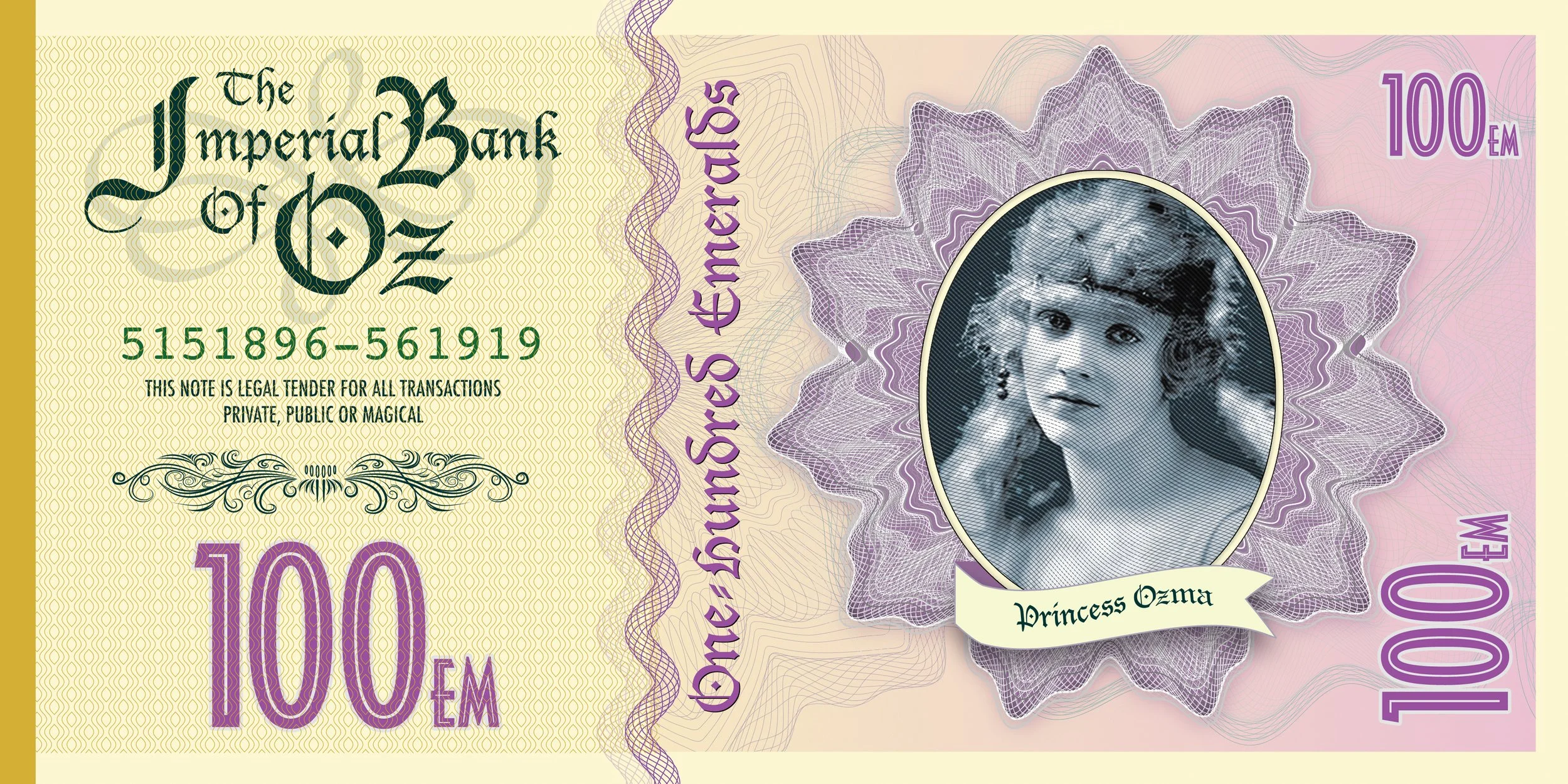
Since "Wicked" and "Wicked Forever" is a thing, I created this “bank note” for the "Wizard of Oz" — 100 Emeralds cash note /
The serial number birth date and passing date. Some say the Wizard of Oz was an allegory.
L. Frank Baum, a journalist at the time in Chicago, is supposed to have composed the Wizard of Oz as an allegory depicting these events. Thus, according to this interpretation, Dorothy (representing America and her honest values) wearing silver shoes (representing the free silver coinage) recruits the Scarecrow (representing the American farmer), the Tin Man (representing the American worker), and the Cowardly Lion (William Jennings Bryan), to accompany her on the yellow brick road (representing the gold standard) to the Emerald City (Washington, D.C.) to plead with the Great Wizard (the Democratic president Grover Cleveland) of Oz (an ounce of gold) for free silver coinage. In the process, Dorothy and her companions also battle the Wicked Witch of the West (William McKinley, the Republican presidential nominee in 1896). Unlike the Democrats, McKinley was against abandoning the gold standard in favor of a more expansionary bimetallist (gold and silver) system. As it turned out, however, the issue of the silver coinage became moot with the new gold discoveries in Alaska in the 1890s, which served to undermine the Democratic platform and, thus, to cost the Democrats the US presidency both in 1896 and 1900. ref: LINK
I love the are of money and I don’t mean Finance, I like the engraving, the reliefs on the coins, and even the typography. One day I decided to make my own version. Hope you like it.
What is the 70/30 rule for artists — it's not pricing! /
The 70/30 rule in art is a compositional and process guideline that can be interpreted in two main ways: as a time allocation for creative workflow or as a balance of visual elements within a piece. The time-based interpretation suggests spending 70% of the time on planning, sketching, and problem-solving, and 30% on execution and detailing. The visual interpretation advises a balance where 70% of the artwork is the dominant, less detailed area, and 30% is the dominant focal point with more detail and visual interest.
I endorse this percentage for those who are detail-oriented and have a passion to articulate their vision to the ne plus ultra! But I am not that guy. I will do everything out of order or all at the same time. I Sketch, Sketch, Sketch, then I break, break, break, and I spend 80% of my time fixing what I broke. “After climbing up that mountain,” it is then that I realize the original broken version 1.0 was the best version of all. So I revert to that version and, with renewed interest, I spend days working on the final version, coloring it, and then completing it.
Finishing a painting is quite an elevated feeling. Lucien Freud said something along the lines of that he knows when a painting is completed if it looks like somebody else did it. As for me, that feeling is mutual. After admiring the work for about 2 weeks or so, I want to go back to it and add to the environment as if I were an explorer. Then I call it a series, and I start another version. Here are two “aliterations” of the Precipice Series below. I was so excited with the first, I wanted to experience more of the “space.” A third is coming — more fog, maybe snow — because I want to keep stepping into that space and see what awaits past the next ridge. Call it serendipity or stubborn imagination — I paint because I’m curious what comes next.
Precipice series: Precipice & Fog 40” x 30”
Precipice Series: Precipice & Ice 40” x 60”
Artist’s Resale Rights Look Great on Paper — but Far Less Great for Artists, Collectors, Gallerists, and Industry Money Laundering /
Canada’s proposed Artist Resale Rights bill is a Trojan Horse…” to avoid the extra adjective (the) and tighten the opening rhythm.
Canada’s 2025 federal budget introduced an Artist’s Resale Right, a policy intended to grant creators a five percent royalty fee on every future sale of their work. The proposal has been marketed as long-overdue fairness, a corrective meant to help artists participate in the rising value of their own creations. On paper, the idea feels noble. In practice, the effects are far more complicated than the headline suggests.
ARR transforms a resale into something larger than a simple exchange between two parties. A resale becomes a recorded financial event that triggers a royalty obligation. That royalty is then treated as taxable income for the artist. At the same time, the resale itself becomes a taxable, traceable moment in the artwork’s lifespan. The artist receives a payment, the government records a transaction, and the asset becomes more visible within the financial system. What appears to be a small administrative detail is actually a structural shift in how art circulates.
The core of ARR lies in the mechanism that governs every resale. When a work is sold on the secondary market, the buyer pays the agreed price. A percentage of that price is diverted as a royalty owed to the artist or the estate. The artist must declare that royalty as income, and the resale is documented as a taxable event for the government. No transfer can occur quietly. Each sale creates a financial footprint that cannot be erased. As a result, the government benefits twice. It collects new taxable revenue, and it gains a clearer view of where high-value art resides, how it moves, and how much it is worth.
This structure also reshapes behavior. Under the old system, some collectors and intermediaries engaged in strategic resales to inflate an artwork’s value. A painting could move between shell companies or trusted associates, generating a series of “record” prices that created the illusion of rising demand. ARR makes such practices expensive. Each artificial resale requires a royalty payment and triggers a taxable event. The economic friction discourages the inflation loop. Price manipulation becomes a costly habit rather than a profitable strategy.
Supporters of ARR emphasize fairness. They argue that artists deserve a share of the long-term value generated by their work. Historically, a painting could sell for a modest sum early in an artist’s career and then appreciate dramatically later on, enriching dealers, collectors, and estates while the creator received nothing. ARR attempts to correct this imbalance. For certain artists, especially those whose work circulates actively in the secondary market, the additional income could provide meaningful support.
The concerns arise when the financial implications are examined more closely. A royalty functions as a fee added to every future sale. The artist receives the payment but must pay taxes on it. A single resale becomes a dual tax event. Buyers may hesitate to acquire works that carry perpetual obligations. Some may shift toward assets without recurring royalties. And as lifetime costs become part of the purchasing calculation, initial prices may rise to absorb future expenses. Ironically, a system designed to help artists can end up pushing their primary market prices higher, making their work less accessible to new collectors.
There is also the issue of transparency. Governments dislike opaque markets because opacity hides financial activity. ARR makes valuable artworks visible in ways they were not before. Every resale is documented. Every price becomes part of a traceable chain. Every movement of the artwork leaves a digital shadow. For honest collectors, this visibility is benign. For those who use art to store wealth discreetly, obscure transactions, or move funds covertly, this evolution is inconvenient. The painting becomes a kind of Trojan Horse. It enters a private home, a vault, or a freeport carrying not only ideas and emotion but a permanent record of ownership, value, and movement.
Yet ARR is not without potential benefits. It can stabilize artist incomes, deter fraudulent pricing schemes, and limit opportunities for laundering. It brings a measure of honesty to a market that often thrives on ambiguity. But the price of this honesty is structural change. Paintings behave less like free-floating cultural objects and more like semi-regulated assets with embedded obligations. Collectors may adapt. Gallerists may struggle. Artists may gain a small but steady income stream, yet also find their primary market shifting around them in unpredictable ways.
The larger question is not whether ARR is fair, but what it transforms. It promises to reward artists, yet it also pulls art deeper into the architecture of fiscal transparency. It speaks the language of equity, yet creates new layers of cost. It aims to correct a cultural imbalance, yet inadvertently alters how art is bought, sold, held, and perceived.
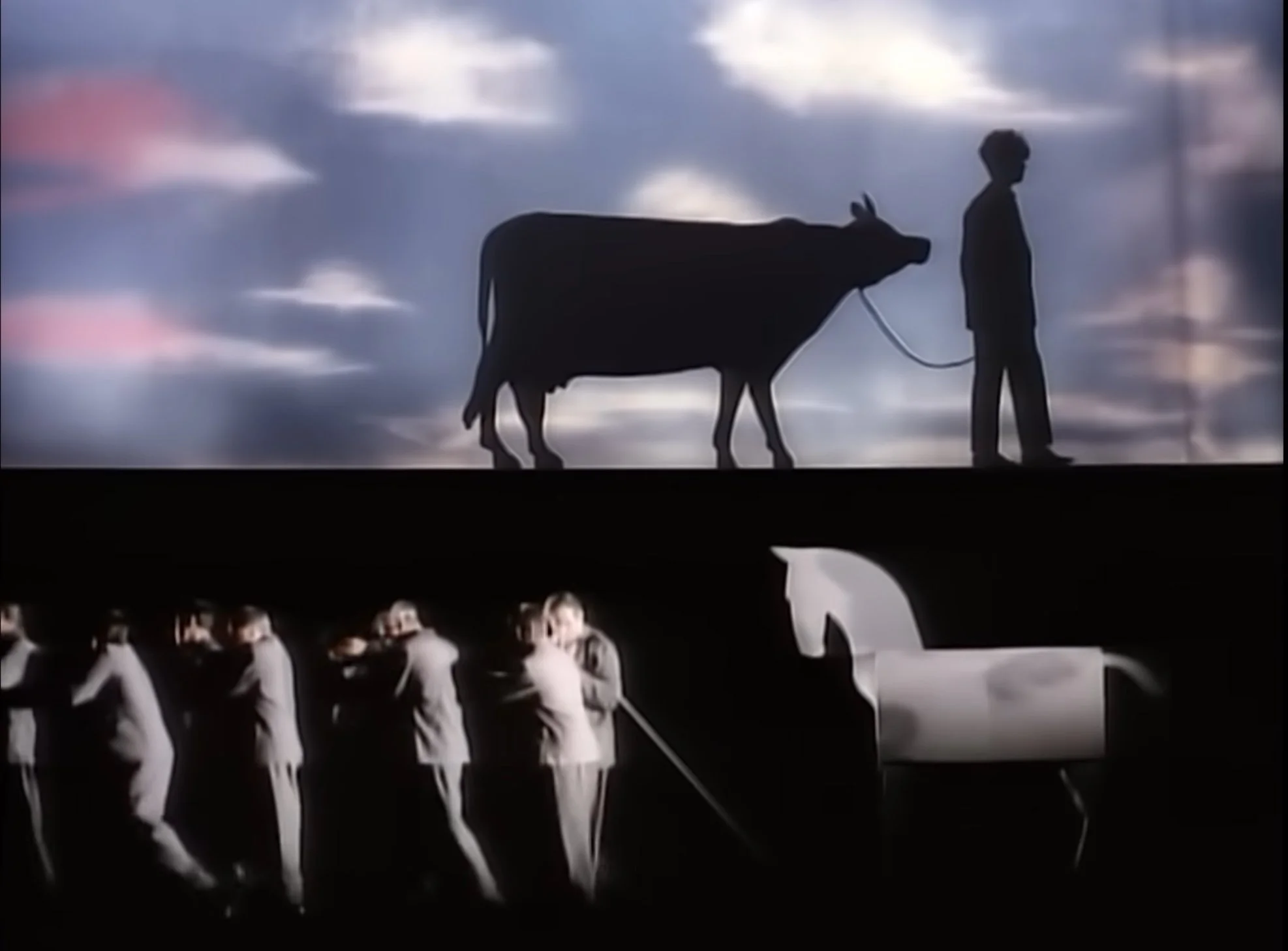
Echo & the Bunnymen's "Bring On The Dancing Horses" is the perfect vehicle for the Art as Trojan Horse metaphor. The song's compelling rhythm and aesthetic allure act as the vessel, bypassing conscious defenses to deliver its cargo: deep ideas, surging passions, and the inspiration that compels action. Now this Trojan Horse could be used for an extra 5% for taxation,
Art has always carried ideas into private spaces like a Trojan Horse. It slips past defenses and changes minds, one viewer at a time. ARR inserts a second Trojan Horse inside the first. It carries financial disclosure, tax events, and asset visibility into the same spaces where ambiguity once thrived. Some will welcome this. Others will resist it. Everyone in the art ecosystem will be forced to adapt.
ARR may help artists in certain circumstances. It may harm them in others. It may strengthen the market, or it may compress it. What is certain is that ARR changes the very identity of art within a modern economy. A painting becomes both an act of human expression and a permanent ledger entry that follows its owners wherever it goes.
This is a new era for art. The question is whether this era strengthens culture or slowly transforms it into an industry where every canvas carries not only a vision, but a paper trail.
WIll artists, art consultants, and advisors, fill the gallery void if the industry collapses /
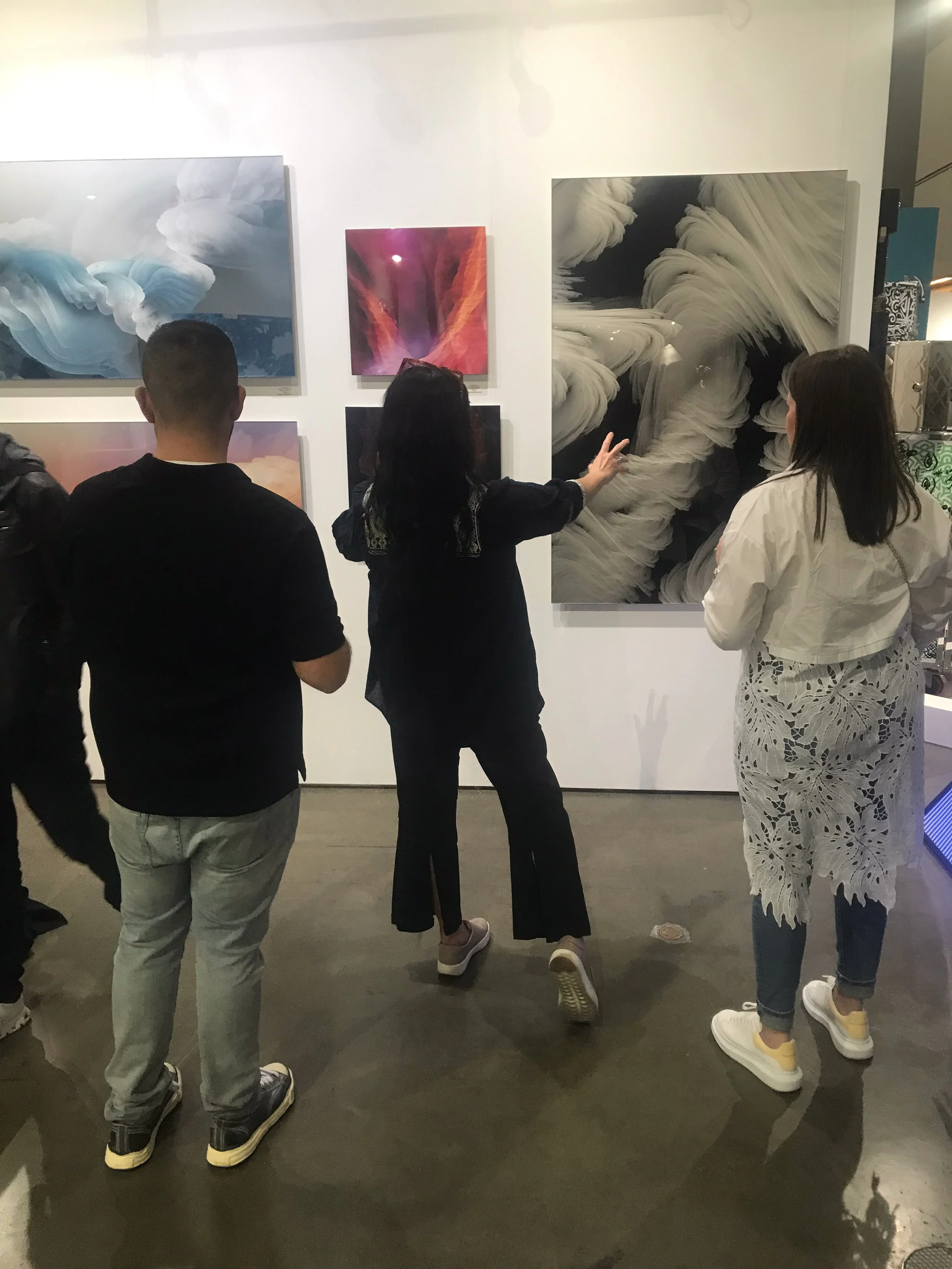
L.A. Art Show 2023 — exhibiting my work with bG Gallery.
In my opinion, galleries are collapsing under the weight of their own inefficiencies and conflicts of interest. The economics alone are absurd. Galleries routinely take a 50% cut of every sale; a markup no other industry would survive, thereby leaving artists with a fraction of the value they create. And buyers, ironically, become the victims of this inefficiency: they pay premium prices inflated not by artistic merit, but by an outdated distribution system.
Now, if that weren’t enough, a tiny, arcane circle of galleries decides who the “cool kids” are. A handful of power brokers anoints the chosen few, shapes museum programming, and manufactures cultural legitimacy. Everyone else, artists, collectors, and even institutions, is downstream of their decisions. But if anyone deserves to be closest to the source, it’s the people actually buying the art.”
The efficiencies extend far beyond simple communication. Commissions are dramatically better in this emerging model, with artists retaining far more of the value they create. Museum curators are freer as well — able to champion the work they believe in without worrying about alienating a museum director who answers to a mega-gallery donor. And consultants handle the tasks galleries once monopolized: they help collectors build thoughtful, balanced portfolios for clear, transparent, nominal fees. No hidden markup. No political pressure. No gatekeeping.
If I were responsible for moving human culture forward — if it were my job to decide which works deserve to enter the fine art canon — these are the criteria I would use: Originality, Contribution, and Continuity (OCC) as my benchmark... I picked a handful of well-renowned artists below to illustrate how Originality, Contribution, and Continuity can be a valid way to judge museum-grade work.
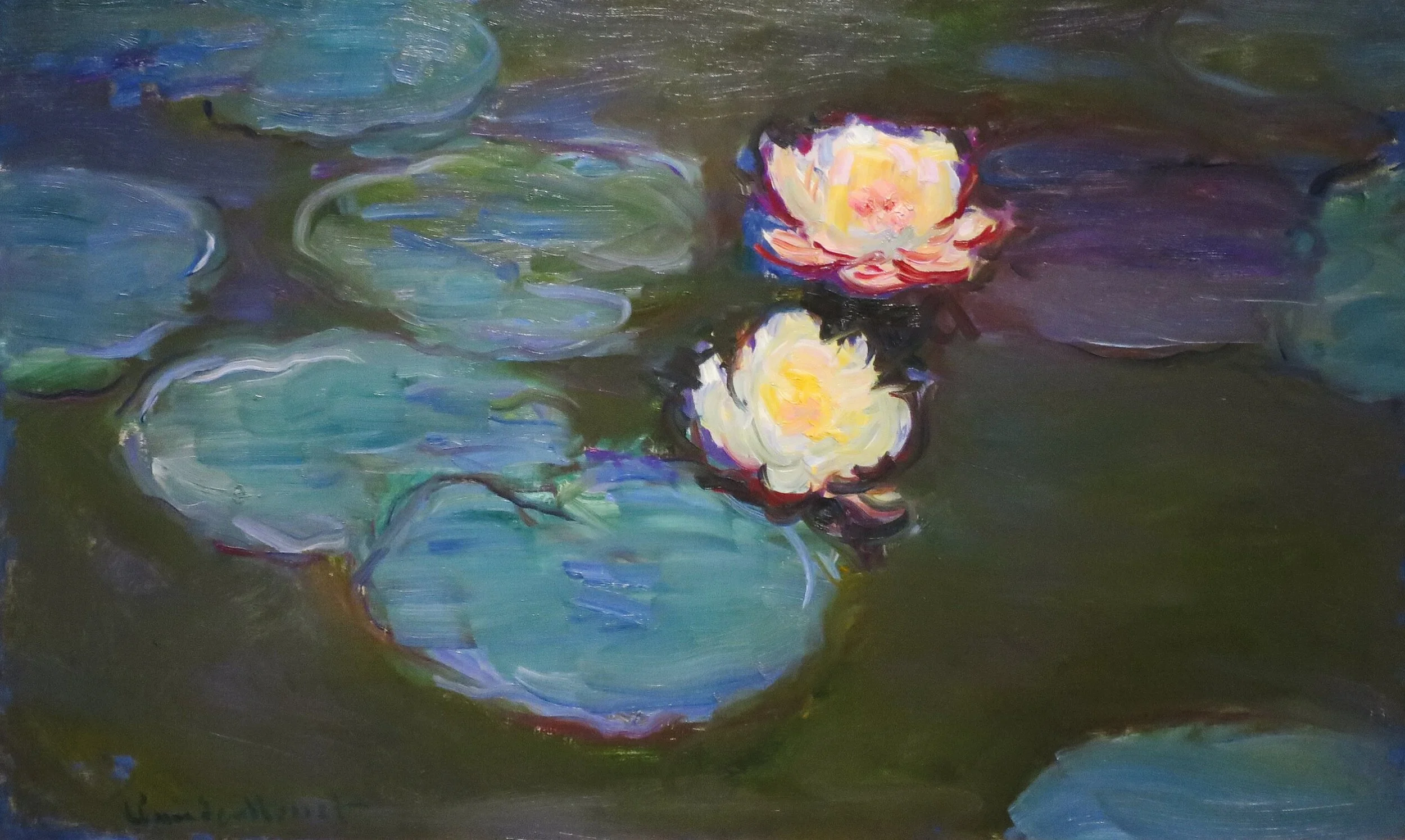
Claude Monet:
Originality: Monet did not paint water lilies; he painted the physics of perception. His originality was not in inventing Impressionism outright, but in pushing it past experiment and into clarity — revealing how light, color, and atmosphere become experience inside the eye. He dismantled academic realism and replaced it with a new visual truth: the moment as felt rather than the scene as recorded.
Contribution: Monet was not the first Impressionist, but he is the one who solidified Impressionism into a movement. With Impression, Sunrise, he transformed scattered innovations among artists into a coherent genre, a visual philosophy with momentum. He contributed more than technique; he contributed infrastructure — a shared aesthetic, a unified cause, and a cultural direction. Monet didn’t just paint the movement; he organized the gravitational center that made it unavoidable.
Continuity: Monet evolved relentlessly. From Argenteuil to the Rouen Cathedrals to the vast late Water Lilies, the thread is unmistakable: a single mind deepening a lifelong inquiry. This is continuity — not repetition but refinement, a disciplined devotion to understanding how humans perceive time and light. Monet stands as a blueprint for how an artist builds civilization: through patient, focused, enduring insight.
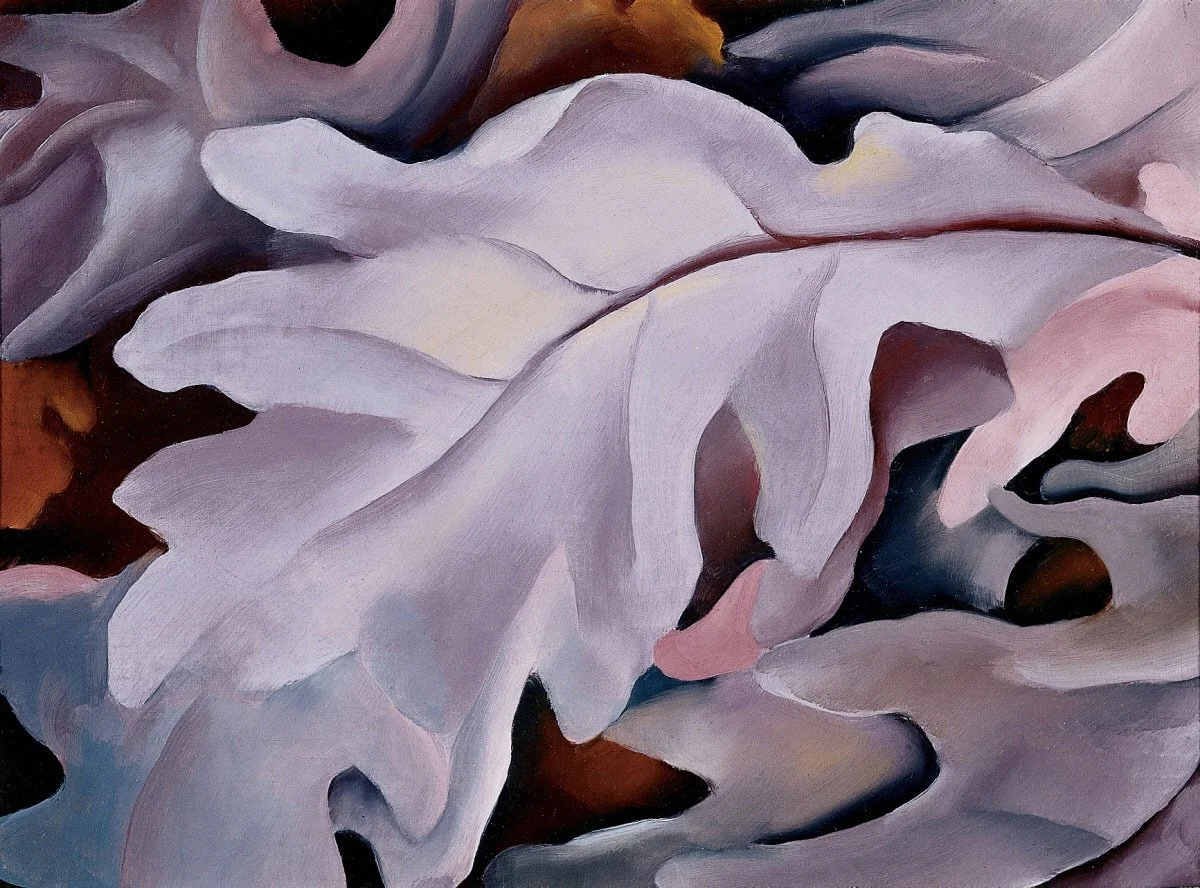
Georgia O’Keeffe
Originality: O’Keeffe did not paint flowers; she painted the architecture of attention. Her originality came from isolating form, stripping away the decorative, and revealing the monumental inside the intimate. Nobody before her had taken nature’s fragments — bones, blossoms, desert horizons — and transformed them into pure emotional geometry. She saw scale not as a measure of size, but as a measure of importance.
Contribution: O’Keeffe redefined American modernism by giving it a new visual grammar: clarity, distillation, and radical focus. While others looked to Europe for direction, she carved out a distinctly American visual identity rooted in light, space, and internal experience. She didn’t just contribute works; she contributed a new way of seeing — one where magnification becomes revelation and abstraction grows out of reality rather than escape from it.
Continuity: O’Keeffe’s evolution was unwavering. From the charcoal abstractions to the New York skylines to the New Mexico desert, the throughline is unmistakable: a lifelong search for the essential. She stayed disciplined, independent, and fiercely consistent in her pursuit of clarity. Her continuity was not stylistic stagnation but an unbroken deepening of vision — a sustained commitment that allowed her to shape an entire chapter of American art.
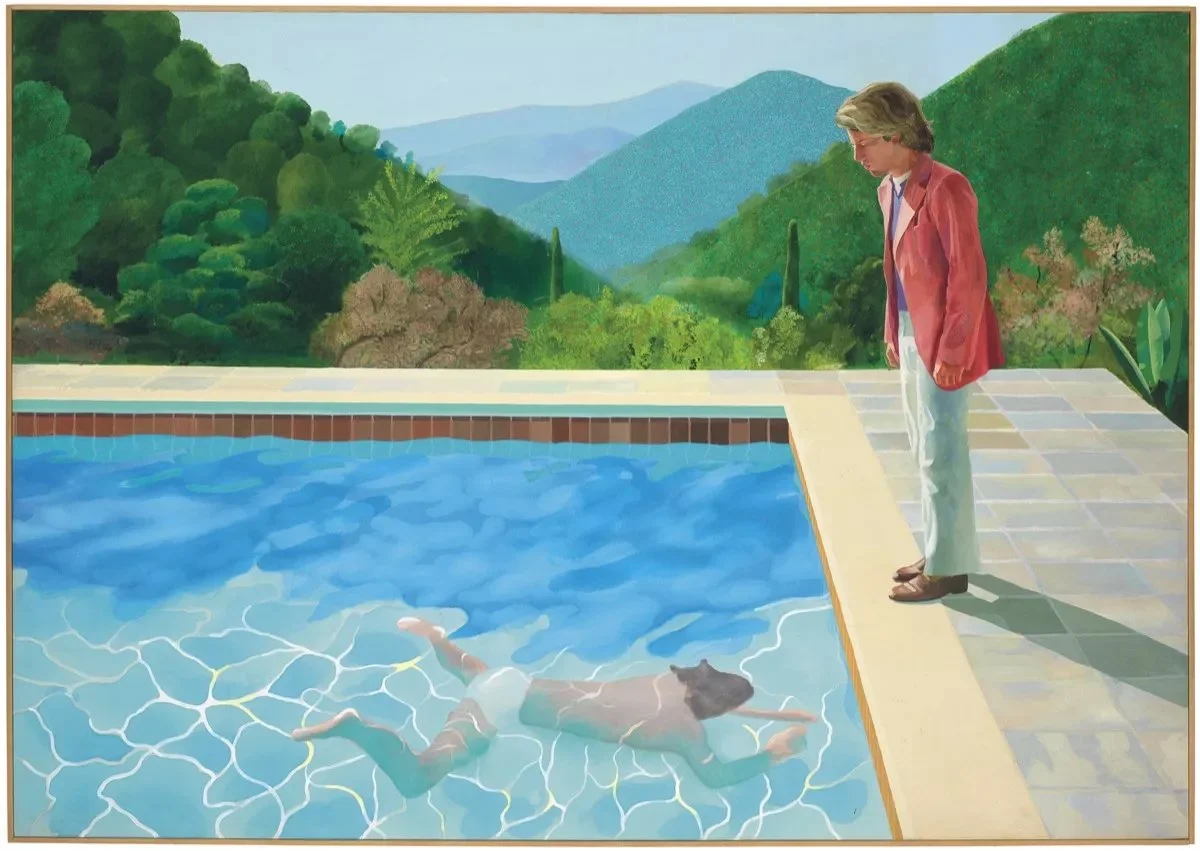
David Hockney:
Originality: Hockney’s originality lies in his persistent reinvention of vision. He questioned how we see — through perspective, memory, movement, and even screens. Whether in pools, portraits, photo collages, or iPad drawings, he explored the mechanics of looking with a curiosity bordering on scientific.
Contribution: Hockney embraced technology before it was fashionable. Photography, Xerox machines, Polaroids, faxed drawings, digital tablets — he treated each tool as a new brush, expanding the possibilities of contemporary painting. His contribution was to dissolve the boundary between medium and message, proving that innovation in tools can lead to innovation in perception.
Continuity: Though his styles shift, Hockney’s continuity is intellectual: a lifelong reinvention of how art captures experience. Every phase — swimming pools, Yorkshire landscapes, digital work — circles the same pursuit: How do we see the world, and how can art make that seeing more alive? His consistency is his refusal to stand still.
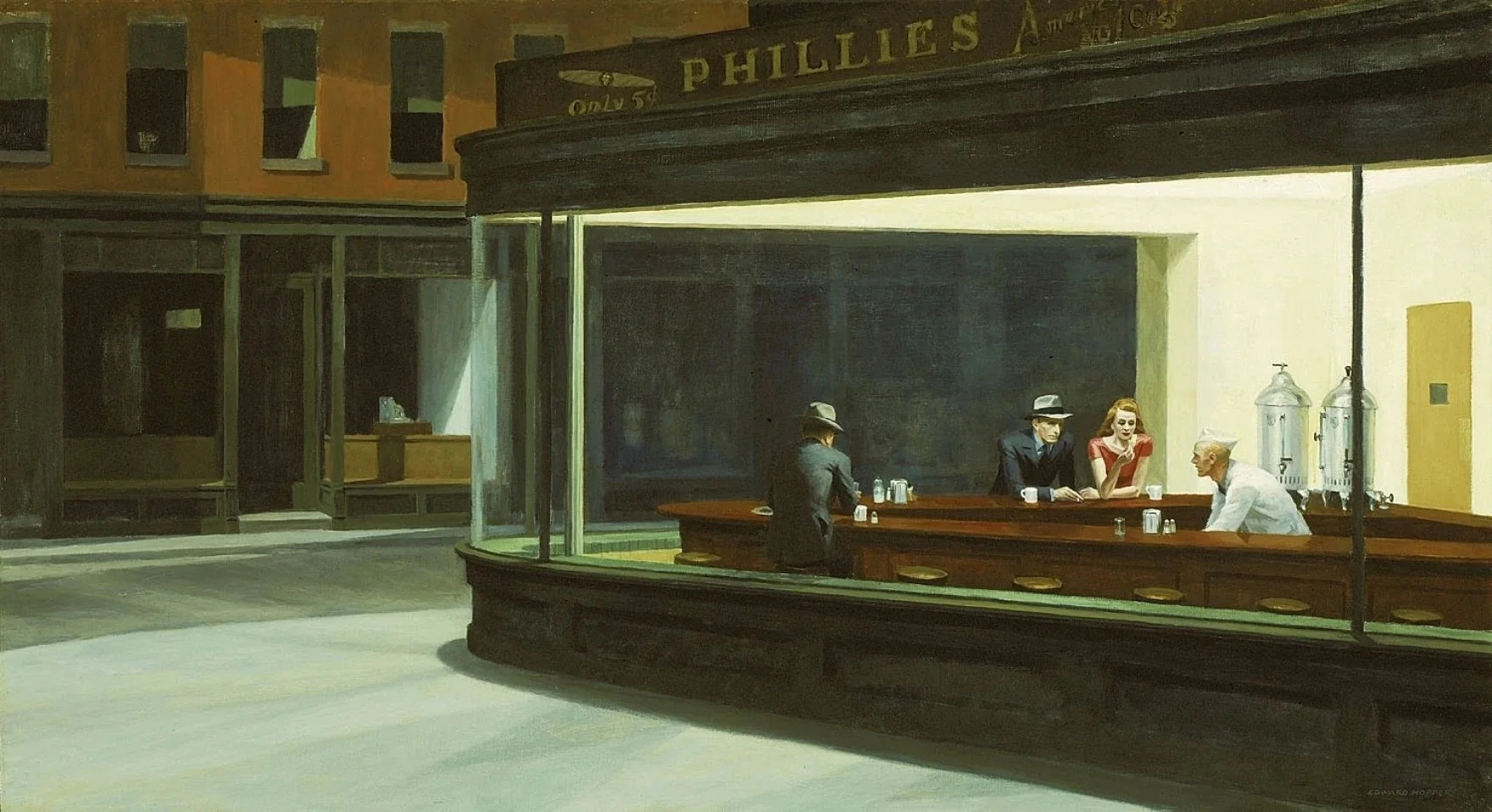
Edward Hopper
Originality: Hopper’s originality was his ability to turn isolation into a universal language. He distilled scenes into psychological states — a gas station at dusk, a woman by a window, a diner glowing in the dark — each one a quiet compression of longing and distance. He recognized that modern life was full even when nothing happened.
Contribution: Hopper contributed an atmospheric vocabulary that fused space with emotion. He redefined realism not as documentation but as mood. Through light, architecture, and silence, he created a cinematic grammar that influenced generations of filmmakers, photographers, and painters. Hopper showed that atmosphere can reveal humanity more deeply than narrative ever could.
Continuity: Hopper maintained a disciplined, lifelong exploration of solitude. From the early etchings to the final watercolors, the central inquiry never changed: How does space shape the human condition? His continuity is not monotony but mastery — a deepening of a single, resonant human truth.
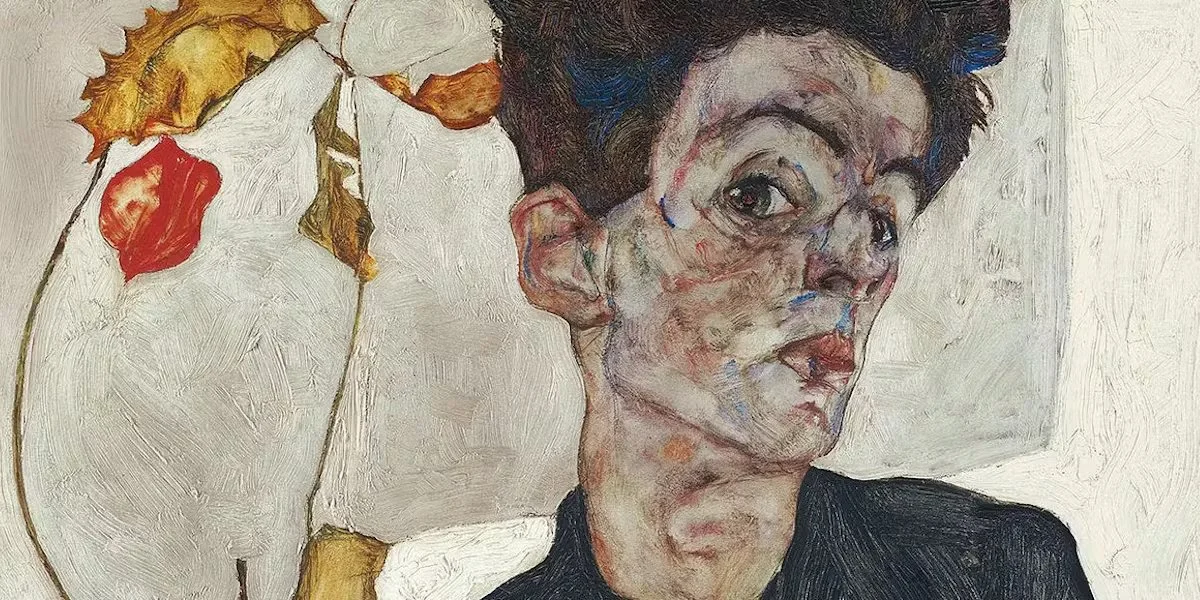
Egon Schiele
Originality: Schiele’s originality lay in his line — raw, angular, electric. He stripped the body of idealization and revealed the nervous system beneath the skin. No artist before him exposed human vulnerability with such immediacy. His line was not just a tool; it was a psychological probe.
Contribution: Schiele contributed a radical new understanding of the psyche. His portraits were not likenesses but self-dissections — an unfiltered confrontation with desire, shame, alienation, and interior conflict. He forced viewers to witness the human mind laid bare, advancing the notion that art could reveal identity not as a mask but as a rupture.
Continuity: Despite his short life, Schiele’s continuity is unmistakable. Every period, early, mid, late — circles the same obsession: Who am I beneath the surface? Who are you when your defenses fall away? He deepened this inquiry relentlessly, refining it until line, psyche, and identity fused into a singular, unmistakable voice.
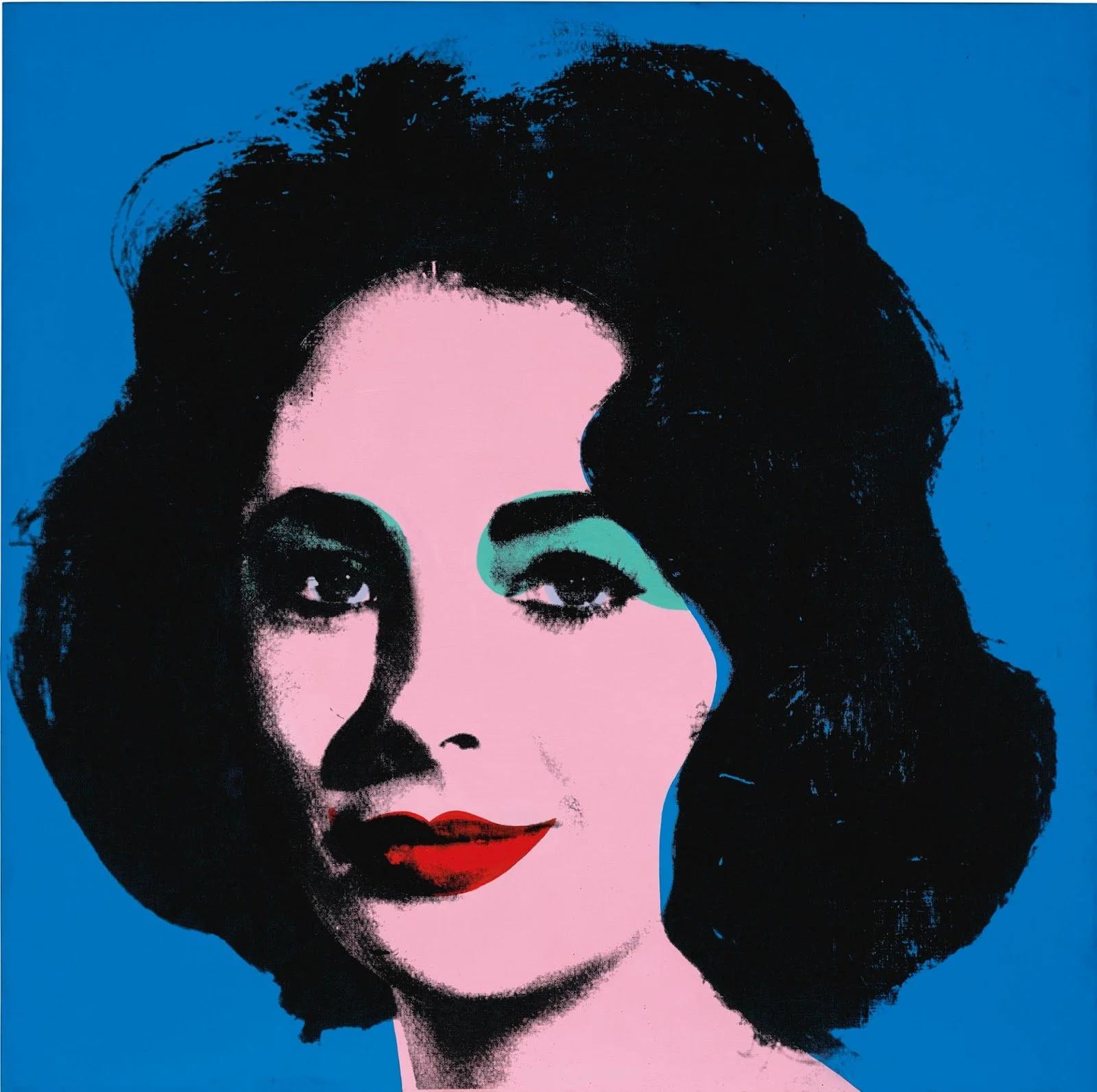
Andy Warhol
Originality: Warhol’s originality was not just that he painted soup cans; it was that he painted what everyone had in common. He saw the unspoken democracy of American consumption: the president drank Coca-Cola, and so did the factory worker. In a fractured society, he identified the cultural objects that unified people across class, geography, and status. His originality came from recognizing that the shared everyday object was the true icon.
Contribution: Warhol’s great contribution arrived by accident — an over-painted lip line on his Elizabeth Taylor silkscreen. That mistake transformed Taylor from a person into a construct, a symbol rather than an individual. Warhol realized in that moment that celebrities had replaced the ancient gods and goddesses: larger-than-life, endlessly reproduced, worshipped, consumed. He shifted art’s mission from depicting reality to revealing the machinery that manufactures reality — fame, commodification, myth.
Continuity: Across every phase of his career, Warhol returned to the same idea: American culture fabricates its own pantheon. From Marilyn to Mao to disaster series to Brillo Boxes, the throughline is unmistakable — a lifelong study of how icons are created, circulated, and adored. His continuity was not stylistic; it was anthropological. Warhol chronicled the birth of a new religion: the worship of the image itself.
Summation:
In the end, culture has always belonged to the people who care enough to build it — the artists who create the work and the collectors who give it a life beyond the studio. When a small circle of intermediaries controls the gate, culture shrinks. But when artists, consultants, and engaged collectors shape its direction, culture expands. It grows more diverse, more democratic, and more honest. The future of art will not be determined by a handful of galleries deciding who belongs; it will be shaped by those who recognize originality, reward contribution, and support continuity. That is how civilizations have always advanced — not through exclusivity, but through participation. The gatekeepers had their century. The next one belongs to all of us.
The Billion-Dollar Ghost /
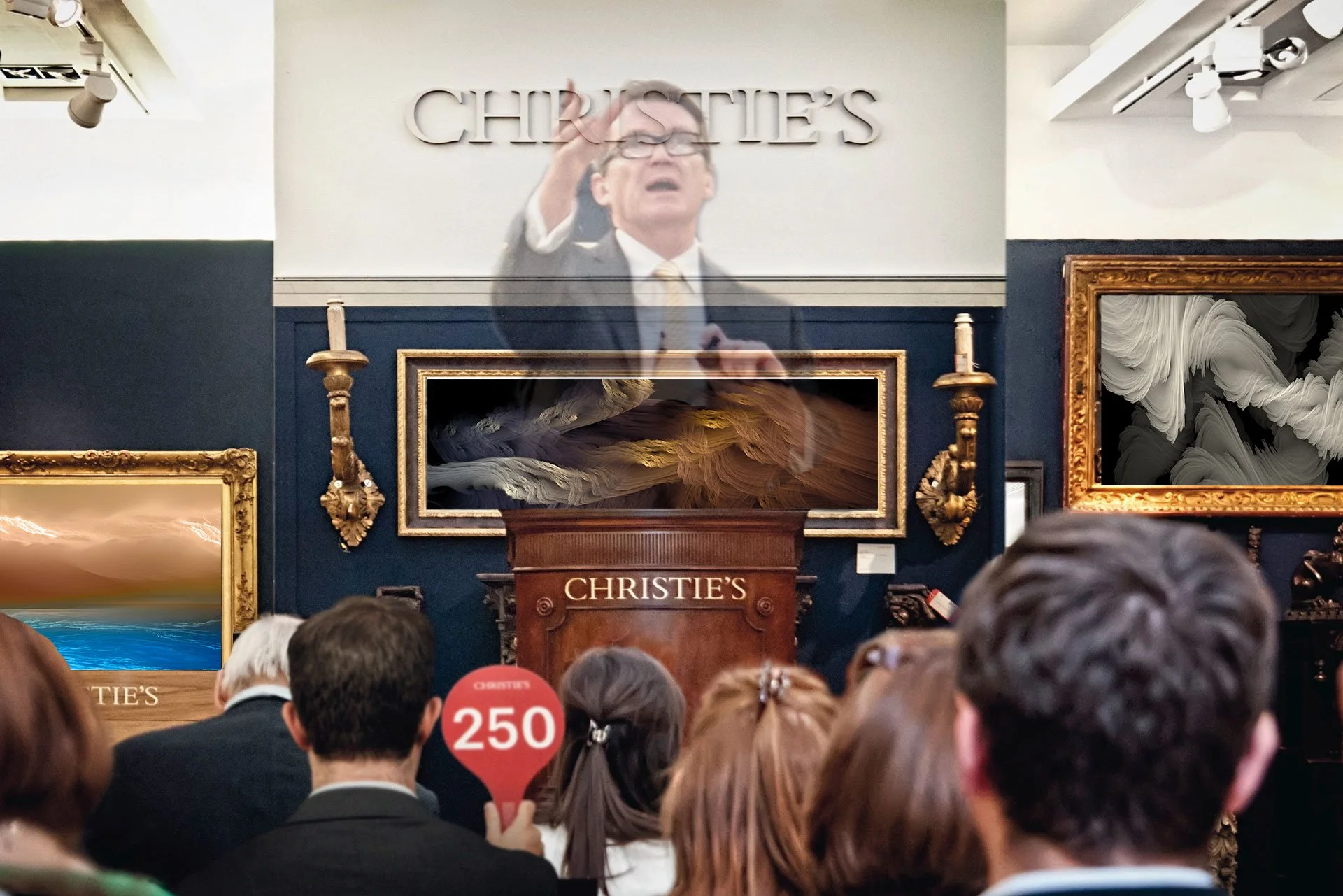
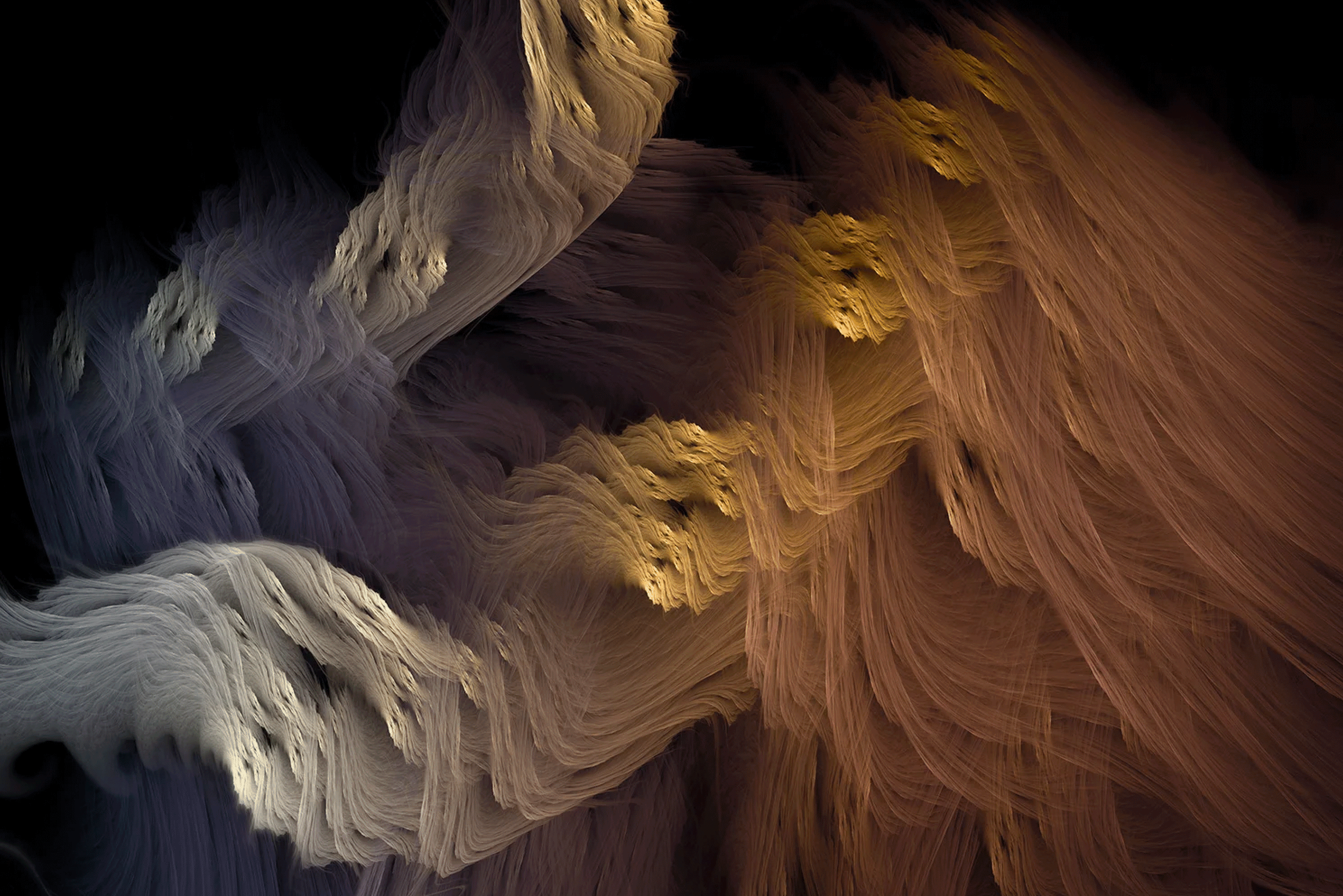
An auctioneer’s ghost at Christie’s taking a bid from the chandelier. Caveat: I replaced the actual Christie's paintings with my own!
Every November, the auction houses stage their annual Broadway production. Christie’s rolls out its numbers, the press reacts with automatic enthusiasm, and the headlines gush about a “market rebound,” as though one evening of bidding could resurrect an entire ecosystem. This year’s script delivered the usual spectacle: $690 million in sales, $2.2 billion across the week, and a chorus of commentators insisting the art market is suddenly “healthy” again. It’s the same choreography every year, and everyone knows their role.
But none of this tells us anything meaningful about artists, galleries, or the cultural economy. It isn’t a metric; it’s a ritual — a performance meticulously engineered to maintain the aura of confidence and inevitability. And yet the punditry continues to misread the motives behind these headline-grabbing numbers. A perfect example is the $236.4 million Klimt. The press treated it as a grand gesture of cultural signaling, as if billionaires throw around a quarter-billion dollars to impress each other with taste. That interpretation misunderstands how real power behaves.
The ultra-wealthy save for “tech bros” and do not showboat. They don’t need to. They already own the infrastructure: the companies and access to media outlets to promote their wares. The people who perform status spending as if they were actors playing a part are the ones trying to climb into that world — the nouveau riche, the hedge-fund strivers, the crypto kids. They make noise because they are insecure. The mighty move quietly, through advisors, consortia, intermediaries, and shell corporations. They don’t raise paddles; they move markets.
If the rumors surrounding the Klimt are true — and they almost always are — the buyer is one of the usual suspects. Possibly a Saudi prince. Perhaps a sovereign wealth vehicle. Possibly a consortium shielding a larger political or cultural agenda. But let’s be clear: if a Saudi royal acquired the painting, it wasn’t to spark envy on Instagram. Their acquisitions are geopolitical, not social. They consolidate cultural sovereignty. They reallocate wealth outside Western banking systems. They plant seeds for future national museums. They strengthen diplomatic leverage, and this has nothing to do with bragging rights. It is statecraft dressed in silk.
Meanwhile, auction houses are hardly neutral brokers. Their business model depends on rumor, opacity, and myth-making. They thrive on choreographed suspense and whispered identities. They help launder wealth, legitimacy, and narrative in equal measure. A $236 million sale can easily be the product of a consortium — strategic, coordinated, anonymous — and the public NEVER knows. What matters is that the performance convinces the audience that the system works, that the market is strong, that the illusion is alive.
And none of this money circulates back to the people who create the work. These astronomical figures reveal nothing about rising studio rents, medical bills, debt, the instability of artistic income, or the absence of resale royalties in the United States. They do not capture how isolating it feels for an artist to watch their work become proof of a “healthy market” while the creator struggles to find the time or resources to make the next piece.
If you want to understand the fundamental economics of art, step away from the auction block and walk into any major art fair. An average painting might sell there for around $5,000. After the gallery takes its 50% percent commission, and the IRS claims its share. The artist is left with maybe $2,000 — enough to cover a month’s rent in Los Angeles if you’re lucky, or a mortgage payment in Helena, Montana. The irony is that galleries have become “the new starving artists,” operating on razor-thin margins and desperate sales. Art consultants, advisors, and even the artists themselves may end up replacing them entirely. The ecosystem is quietly cannibalizing itself while the auction houses make noise about “recovery.”
As we approach Miami Art Week, this machine will shift into full volume. Art Basel Miami Beach has become the industry’s annual sermon of optimism — the cathedral where everyone gathers to perform the fiction that everything is fine. The auction is the prologue. Basel is the crescendo. Collectors show enthusiasm for each other. Galleries take on existential financial risk to stand in the right rooms. Institutions wander the aisles to signal they still matter. Everyone pretends the system is stable because acknowledging the truth would collapse the ceremony.
The real story is not the Klimt. It’s the fiction we keep buying. A billionaire does not spend $236 million for status. That’s what the almost-rich think they do. The truly powerful shape culture, consolidate influence, and move wealth across borders in ways most people will never see. Look at J. Paul Getty, who left behind two public museums that now educate millions. Look at John D. Rockefeller, whose cultural, scientific, and social philanthropy permanently altered the American landscape. These are not gestures of vanity — they are acts of cultural engineering.

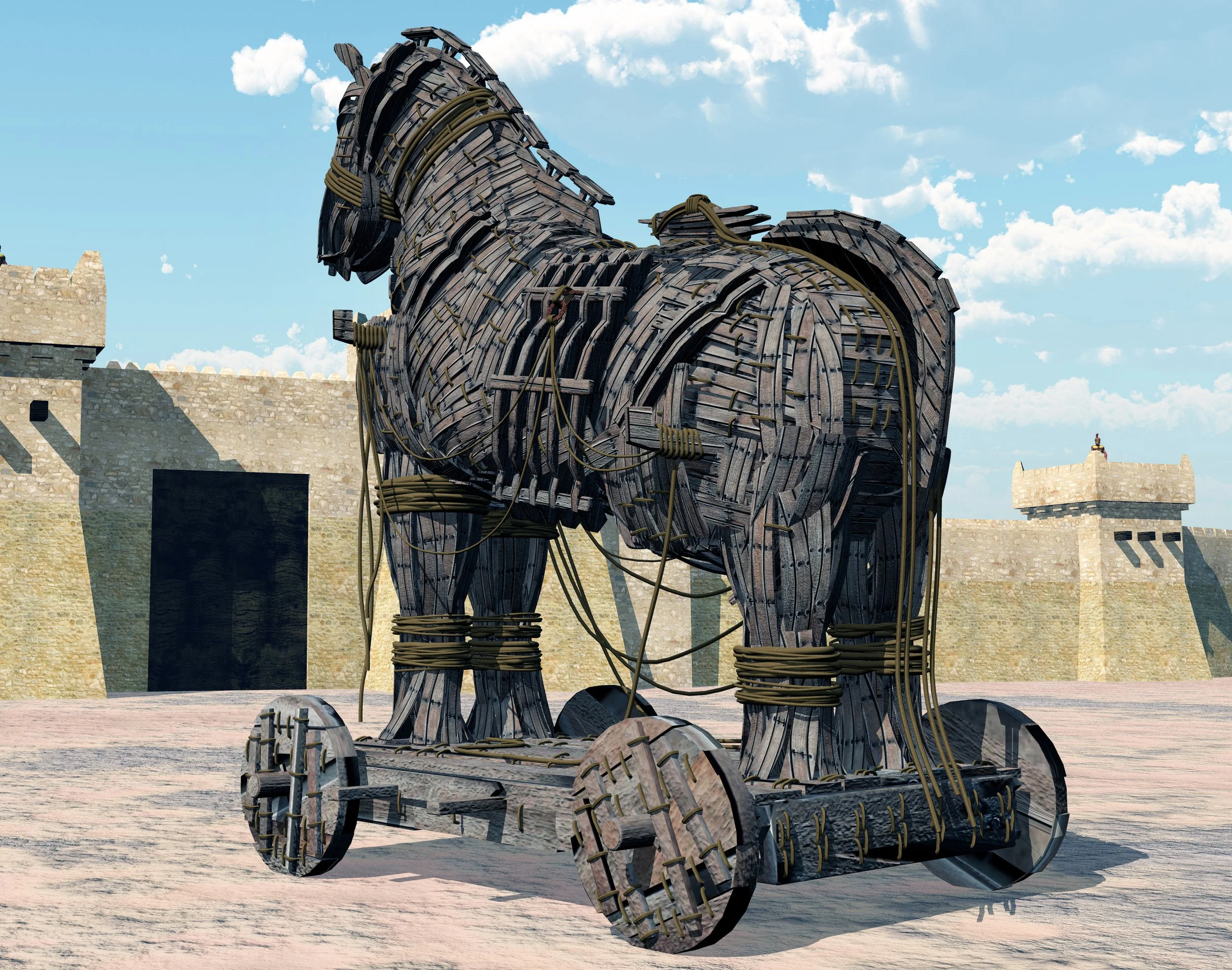
The auction room is a theater for the nouveau riche. The real motives live in the dark. And until we are willing to talk about that honestly, we’ll keep applauding the performance without ever questioning the plot.
The Art World vs. The Art Market — And Why Artists Must Always Design Our Culture /
Google defines the Art World as a complex network of individuals and institutions—artists, galleries, museums, collectors, and critics—interacting across overlapping spheres. It is not a monolith but an ecosystem with different values and hierarchies depending on whether you’re dealing with academia, exhibitions, or the marketplace. Under this definition, most of us working artists are firmly embedded in the Art World. We exhibit, we produce, we participate. But the true global Art Market is something else entirely.
In reality, the Art Market is small, centralized, and astonishingly selective. Eighty-two percent of sales occur in the United States, the United Kingdom, and China, and more specifically, in three cities: New York, London, and Hong Kong. Opportunity is global, but the gatekeeping is geographically microscopic.
Museum access is even tighter.
A 2015 study by The Art Newspaper found that 30% of major U.S. solo museum shows came from artists represented by only five mega-galleries: Gagosian, Pace, Marian Goodman, David Zwirner, and Hauser & Wirth. The illusion of an open field disappears once you recognize how concentrated museum pipelines are. A small number of galleries determine which artists are elevated, which careers are validated, and which works become part of cultural memory.
This creates a functional monopoly—not only over commercial opportunity, but over cultural heritage itself. When influence consolidates, cultural narratives consolidate with it. And when money becomes the primary driver, art risks becoming a commodity first and a contribution to civilization second. Paintings increasingly function like real estate or securities. If a Klimt sells for $236.4 million, it isn’t being hung over anyone’s fireplace; it’s being stored, insured, and treated as an appreciating asset held by investors.
As the market shifts toward financialization, the ecosystem around it shifts too. There are roughly 500 members in the American chapter of the International Association of Art Critics (AICA-USA). But a securities market does not require critics; it requires appraisers. It requires valuation, not interpretation. And what does that mean for artists? It means the target has changed. It means most galleries, especially mid-tier ones, struggle to compete. It means the Art Market’s priorities increasingly diverge from those of artists who are trying to create something meaningful rather than something merely tradable.
And this brings us to why artists must define their purpose clearly—because markets shift, but culture endures. Our responsibility is not to chase valuation, but to create work that speaks to human experience and to find the patrons, collectors, and supporters who allow that work to continue. Financial support is not a contradiction to artistic integrity; it is the infrastructure that makes serious work possible. Without it, there is no sustained practice, no long-term exploration, and no legacy that survives the present moment.
Which leads to the real point—the part that matters.
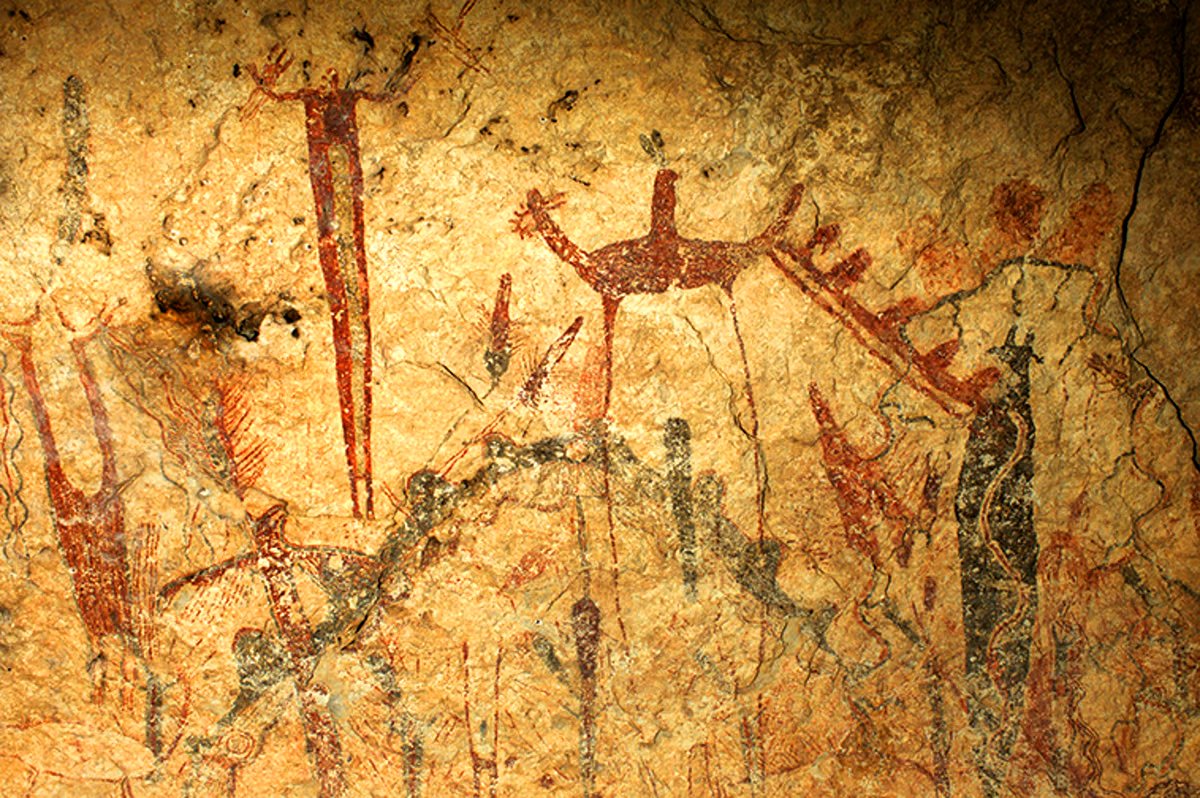
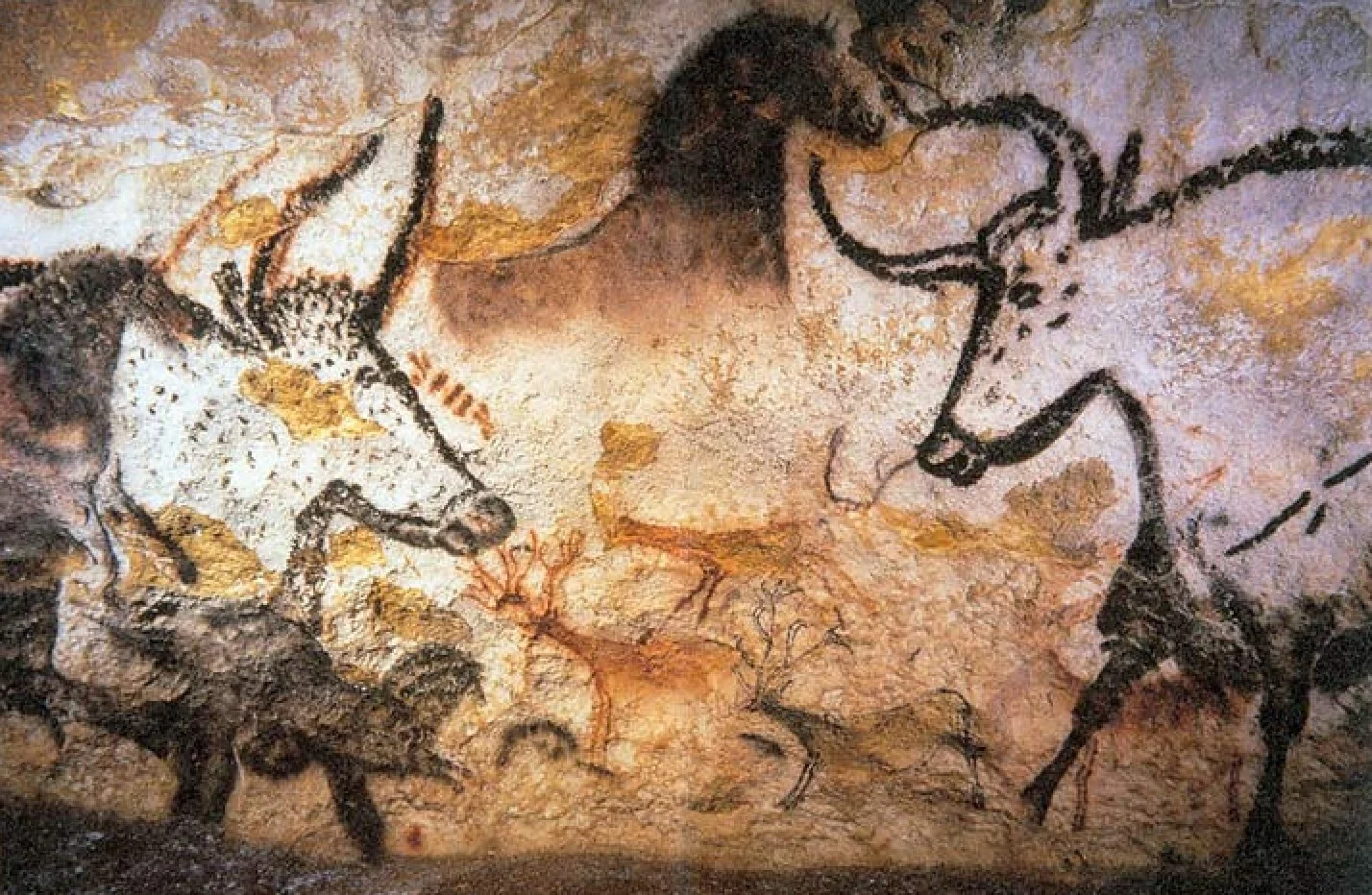
The best example of what artists contribute to civilization is still found deep underground in the caves of Lascaux. Those paintings were created without markets, without galleries, and without institutions. They were made because early humans needed to express something profound about existence. They are spellbinding not because they are old, but because they are true. Thousands of years later, they continue to mesmerize and remind us what humanity is capable of creating when the intention is pure and the vision is unfiltered.
We, too, will have to find our own “caves”—which in our era means patronage, collectors, and sustainable careers—not because art should be commercial, but because practice requires support. Once we find those caves, we must deliver work worthy of them. The duty remains the same: to create culture, to inspire civilization, and to leave behind something that proves we were here and that we understood what it meant to be human.
Who is Alma Allen, Trump’s Pick to Represent the US at the Venice Biennale. Bigger Question: Why? /
The original raison d'être (reason for being) of the Venice Biennale is to be a platform for Contemporary Art. It was intended to provide a regular, biennial platform for the discussion and exhibition of contemporary art practices, which were not typically represented in fine arts museums at the time. Let’s presume this mission statement is the true raison d'être. Alma Allen’s work is included in the permanent collections of the Los Angeles County Museum of Art and the Palm Springs Art Museum in California.
Alma Allen's bio from ARTSY: https://www.artsy.net/artist/alma-allen
I can appreciate the craftsmanship and his choice of materials, but some of them look like chrome-plated “Tumors,” and others look like gilded detritus of smashed-up auto-body scraps. Am I jealous of this guy? — Yes, I want a foundry and factory too, but as for his vision and ideas, NO! — The New York Times described the shapes as "sensuous biomorphic forms," and 2014 Whitney Biennial co-curator Michelle Grabner selected three of Allen's large-scale sculptures for inclusion in the 2014 Biennial.
I perfectly understand why Trump chose this artist. Trump owns a gold-plated toilet and allegedly gilded molding purchased from a Home Depot catalog as decor for the Oval Office. To be fair, during a recent interview with Fox News' Laura Ingraham, Trump explicitly stated: "No, this is not Home Depot stuff," and "You can't imitate gold.” Well… you can imitate gold, and it is called gilding, but even if what they used is genuine gold leaf, it is still gilding. Trump is obviously fulfilled by facades and seemingly adores gilding, as does Allen Alma. (“Great minds think alike?” ) Maybe gilding is the message in Allen Alma’s work, and maybe gilding what is not gold is Trump’s raison d'être.
Gustav Klimt's Portrait of Elisabeth Lederer, which recently sold at Sotheby's for a record-breaking $236.4 million — Decorative art is the new ‘FINE ART’ /
In 2015, I was looking for a gallerist to hang my work. I sent out 100 postcards all across Los Angeles County, and I was lucky to receive a response from two gallerists. One of the gallerists came over to the" studio,” checked out my work, had very nice things to say about it, but he called my art” definitely not fine art but decorative art.” My polite retort: “Tell that to Gustav Klimt, Mark Rothko, and Jackson Pollock. He countered with “…Back then, their works were considered fine art.” Well, circa 2025, it looks like decorative art is the new “Fine Art.” However, what is heartbreaking is that the Klimt just sold for $237-mil million. It will now go to Freeport as an asset to be sold later on as if it were a stock or bond.
Art is not circling down a drain but some galleries are! /
The Invisible “Buyers:” How Corruption Built and Burst the Art World’s Bubble
Abstract: The high-end art market became the asset du jour after the 2008 financial crisis, not because of its cultural significance, but because its secrecy provided a perfect vehicle for money laundering and tax evasion. Through schemes involving offshore shell companies and tax-free Freeports, illicit capital created an artificial pump-and-dump bubble, driving up prices and distorting the market's legitimate structure. The inevitable legal crackdown—forcing the removal of billions in tainted funds—has triggered a long correction. This financial contraction, combined with suffocating commercial real estate costs and the erosion of the art-buying middle class, is the true, multi-faceted reason why so many honest galleries are now struggling to survive.
The Illiquidity Paradox: Circa 2014, Artwork became an“asset du jour,” which is illogical. One can sell a stock, a bond, a sliver of gold, faster than one can sell an 850-pound sculpture of a forgotten queen. But art galleries thrived in 2014 because new millionaires and billionaires were being “minted and subsequently they were hiring in their respective businesses.” Inflation was low, and jobs were numerous. It was a time to spend and share the wealth, but there was one more detail to work out… taxes!
Who wants to pay a sales tax or value-added tax of several hundred thousand dollars for a Basquiat? The solution to this dilemma was to send the work to a Freeport. A freeport is a secure storage facility where goods, like art, are exempt from customs duties, sales taxes, and Value Added Taxes. The work is untaxed because the artwork is considered to be “in transit.” Once delivery is “received,” taxes are paid. Let’s say the artwork has been in the freeport for years. In that period of time, the work appreciated 37% and it was then that the buyer decided to donate the Basquiat to the Getty. Did he have to pay taxes on it? No, the buyer did not. In fact, he was now legally allowed to take a 100% deduction on his taxes for donating to a non-profit. I like that idea, but this idea has a dark side, too.
The Art of the Wash: In or around 2014, one could walk into a Swiss art gallery, look at the gallerist or their assistant, and declare, “How much?” The Swiss gallerist or their assistant would reply, “Which piece?" The customer would reply, “ALL OF THEM.” Once the customer got the price, they would write a check for $500,000 and have the art sent to a Freeport, where it would be considered in-transit, untaxed and unseen, for years, again, till a delivery to a buyer was made. In the meantime, more likely than not, it would be sold back and forth to virtual people (read as shell companies), who only exist on paper. After all, in the United States, corporations are legally treated as a person or an organization, and a shell company is their P.O.Box.
The illicit funds were laundered through a process of layering that exploited the legal fiction of corporate personhood:
The Shell Game: The art was purchased and held by shell companies (the "virtual persons"), often in offshore havens. These entities, while having a legal right to transact, functioned solely as "P.O. Boxes" for the criminal's identity.
The String of Washes: The art became a pawn in a string of circular transactions between these virtual persons. The same work would be repeatedly bought and sold at artificially inflated prices (a form of pump and dump), and the money flow would be disguised as fabricated "consulting fees," "refunds," or "commissions" moving between the entities.
The Auction Exit: This mechanism allowed the criminal network to turn their illicit money into seemingly clean profit from an art investment, often finalized by a legitimate-looking auction house sale, thereby integrating the funds back into the clean global financial system.
The Correction: Why the Bubble Killed the Market: This corruption is a fundamental reason why legitimate, ethical galleries are now struggling. The money laundering bubble and the subsequent market correction have delivered a devastating one-two punch:
I. The Financial Contraction
The market distortion created a vacuum at the high end that could not sustain itself organically.
The Bubble Burst: The stratospheric valuations of the 2014-2018 era were based on the demand for a financial loophole, not artistic merit. The removal of a significant amount of this illicit capital due to legal enforcement has caused the high-end secondary market to contract sharply.
Reduced Liquidity: The clean-up has led to a significant decrease in transaction volume at the top, drying up liquidity for the entire ecosystem. Galleries that relied on even a trickle of that high-end money are now struggling with a buyer base that has literally vanished.
II. The Socio-Economic Collapse
This financial pressure collided with a fragile economy that has eroded the buyer base for the mid-level art market.
Unsustainable Overhead: Galleries are squeezed between the exorbitant commercial real estate rents and the high cost of art fair space rentals. These fixed costs are based on inflated, speculative market values, not the razor-thin margins of an ethical art business.
The Vanishing Middle Class: As income inequality has widened, the spending capacity of the core customer base has been decimated. The middle class is no longer able to support emerging artists. As I noted, the definition of luxury has shifted dramatically: owning an investment piece is unthinkable when simply owning a reliable used car is a financial struggle. The buyer pool for primary market art has merely collapsed.
The Obvious: These are the reasons given in the media, it is what the gallies think has happened, and the analysts. However, the cold, hard truth is that millions and millions of dollars have been removed from the market and the middle class.
III. The Legal Reckoning
The saving grace for the market's long-term integrity is that this systemic corruption has been directly addressed by law. The old, low-risk schemes of 2014 are largely over:
Piercing the Veil: Global laws, notably the EU’s Anti-Money Laundering (AML) Directives, have forced the creation of Ultimate Beneficial Owner (UBO) registries. This action directly breaches the secrecy of the "P.O. Box" by mandating that the real human being behind every shell company be identified.
Ending Exclusion: Art dealers and Freeports are now deemed "obliged entities." They are legally required to perform Know Your Customer (KYC) checks, scrutinize the source of funds, and file Suspicious Activity Reports (SARs) for suspicious transactions.
Conclusion: The Cost of Opacity: The art market’s struggles are not just an aesthetic matter; they are a direct lesson in financial morality. The years when art was allowed to function as an unregulated shadow bank for the global elite created a speculative bubble that severely distorted values and drove up the cost of doing business. While new laws are working to clean the financial arteries of the art world, the damage done to the legitimate mid-level galleries—the true cultural engine of the market—has been profound. The long correction is underway, but the cost of the art world's decade of silence and complicity is measured not in tax revenue, but in the number of brick-and-mortar galleries that are now closing their doors. Thus, we artists are all gallerists now.
Elon Musk’s Lawsuit Mentions “Nonprofit” 111 Times—But Never Explains How It Saves Humanity. /
Elon Musk’s Lawsuit Mentions “Nonprofit” 111 Times—But Never Explains How It Saves Humanity — Musk’s non-profit demand is a bait and switch.
Mr. Elon Musk sells himself as a visionary who will save humanity from extinction. This is not hyperbole; it is documented. [0] But before we even evaluate the substance of that claim, we must ask whether he has standing to make it. In his court filing, Musk uses the word "nonprofit" 111 times, yet fails to explain how reverting OpenAI to a nonprofit structure would save humanity, elevate the public interest, or mitigate AI’s risks. The legal brief offers no humanitarian roadmap, no governance proposal, and no evidence that Musk has the authority to dictate the trajectory of an organization he holds no equity in. It reads like a bait and switch — full of virtue-signaling, devoid of actionable virtue. Marc Toberoff, Musk’s attorney, invokes dramatic language throughout the 82-page filing — even calling the alleged betrayal “of Shakespearean proportions.” But what’s noticeably absent is a proper declaration of legal standing. Remarkably, the word “standing” appears only once in the entire filing, but it refers not to Musk’s legal right to sue but to his “professional standing” being damaged by alleged affiliation. Meanwhile, Toberoff uses the word “notwithstanding” thirteen times.
Background: In November 2024, Elon Musk’s lawyers went before a federal court with a demand to block OpenAI’s position to convert from a non-profit organization into a for-profit. Federal Justice Gonzalez Rogers denied Musk the injunction, calling it “extraordinary,” which is shorthand for “going beyond what is usual, regular, or customary.”
However, Elon Musk filed a lawsuit against OpenAI’s CEO Sam Altman in August 2024, and Justice Gonzalez Rogers will let the lawsuit go forward. The legal brief itself is 82 pages long and quite hyperbolic and dramatic. On page one, this gem appears:
“…Elon Musk’s case against Sam Altman and OpenAI is a textbook tale of altruism versus greed. Altman, in concert with other Defendants, intentionally courted and deceived Musk, preying on Musk’s humanitarian concern about the existential dangers posed by artificial intelligence…”
Pretty strong language from a lawyer representing someone who publicly “…supported, and reportedly influenced, the Trump administration’s move to shutter the U.S. Agency for International Development (USAID),” the government’s primary humanitarian arm. USAID dispenses billions in aid to combat poverty, disease, and respond to crises globally. By early 2025, USAID’s headquarters was closed, its website taken offline, and its leadership placed on administrative leave after resisting DOGE’s efforts to access secure systems. (read that sentence again slowly) Musk labeled USAID in a “tweet” on his “X” platform a “criminal organization” and called for its termination. (No proof, no evidenced was proffered.)
Consequently Real World Damage is occurring: 10,000+ Deaths from USAID Collapse After cheering the dismantling of USAID [1], Musk’s rhetoric helped pave the way for devastation. A Boston University study by epidemiologist Brooke Nichols tracked over 10,000 deaths directly linked to the shutdown of USAID-backed healthcare programs. These actions were widely criticized by humanitarian officials and Democratic and Republican representatives in Congress. [1][2]
These are not theoretical harms. They are ongoing tragedies. Musk claims to save humanity — but the numbers say otherwise.
In the lawsuit brief, Toberoff accuses Altman and others of betraying Musk, claiming: “The perfidy and deceit are of Shakespearean proportions.” I dearly hope Mr. Altman’s attorney responded with a Shakespearean retort: “Me thinks The lady doth protest too much.”
On page 11, point 61, Toberoff writes: “…Musk has long been concerned by the grave threat these advanced systems pose to humanity, which he has repeatedly warned is likely the greatest existential threat we face today. These dangers include, without limitation (or exaggeration), completely replacing the human workforce, supercharging the spread of disinformation, malicious human impersonation, and the manipulation of political and military systems, ultimately leading to the extinction of humanity…” Point blank, one has to ask if Musk is demanding that Justice Gonzalez Rogers legislate from the bench and determine what OpenAI can produce, create, or replace. That’s the role of Congress and other government bodies, not the judiciary.
Bait & Switch: I believe this non-profit demand is misinformation and disinformation. This is not unusual for Elon Musk. As far as the spread of misinformation goes, Musk’s “X” platform, formerly known as Twitter, arguably has a monopoly on spreading it. Since 2021, users on X in countries like the U.S., Australia, and South Korea were able to flag tweets they believed to be misleading. Musk later rescinded this. [4] Researchers found that “grooming” narratives — linking the LGBTQ+ community to slurs like “pedophile” — had exploded, with 1.7 million such tweets logged by the Center for Countering Digital Hate. [5] And Russian disinformation campaigns, once curbed by labeling content from authoritarian states, were allowed to flourish after Musk removed those restrictions. [6]
These citations are from respected researchers. But here’s the paradox: Musk accuses OpenAI of spreading misinformation while simultaneously profiting from it. If Musk were truly concerned about humanity’s safety, why is his own AI firm, xAI (Grok), a for-profit subsidiary of X Corp — the very platform accused of enabling hate speech and foreign propaganda?
His goal: To stall OpenAI’s growth and scare off future investors. Instead of defending truth, Musk appears to be projecting that exact questionable behavior onto OpenAI. His lawsuit seems more about disrupting a rival than defending virtue. In my opinion, this is classic law-fare — delay, distract, and exhaust, and his case isn’t about oversight or nonprofit governance. It’s about control.
The Legal Coup de Grace: Musk’s case falters most on the issue of standing. In the 82-page brief, the word is only used once — to refer to Musk’s “professional standing,” not his legal right to sue. [9] This omission suggests that even his attorney couldn’t argue a proper basis for bringing the case.
Here is a potential death blow to Musk’s ambitions: If OpenAI’s for-profit arm is restructured as a Delaware Public Benefit Corporation (PBC), (as Musk’s own xAI is) Musk’s case may be legally dead on arrival:
Under Delaware law, non-shareholders have no standing to sue over a PBC’s internal decisions.
This is not a hypothetical. It’s corporate law. To bolster this point, a 2024 California appellate court ruled that even a director of a nonprofit public benefit corporation loses standing to sue if not re-elected during the lawsuit. [12]
Musk doesn’t hold equity in OpenAI. He has no contractual authority, agreements and arguably lacks any legal standing. I think this is an option “SPANK” this man-child out of court.
His Private Life Is a Mess: Grimes, the mother of three of Musk's children, accused him of isolating her from their children. [3]
Ashley St. Clair sued Musk for sole legal custody, citing harmful behavior. [4]
Justine Wilson, Musk's first wife, publicly criticized his manipulation and abandonment. [5]
His daughter, Vivian Jenna Wilson, legally changed her name to cut ties with him and condemned his views. [6]
At least three mothers and one daughter have publicly spoken out. What Musk promises to the world, he appears to have denied to his own family.
The Minnesota Deepfake Lawsuit & Taylor Swift:In April 2025, Musk filed a separate lawsuit — this time to strike down a Minnesota law that bans non-consensual AI-generated deepfakes. [10] He argued that banning these manipulations violated free speech.
Minnesota’s law prohibits AI deepfakes used in:
Pornography
Political deception
Commercial fraud
And it was carefully crafted to protect celebrities, actors, and citizens alike.
This came after Musk shared a doctored image of Taylor Swift wearing a fake “Swifties for Trump” T-shirt — which spread widely before being debunked. [11]
Conclusion: Elon Musk’s lawsuit mentions “nonprofit” 111 times and produced 000 suggestions, ideas, or programs, and never once explains how a non-profit status saves lives, protects democracy, or elevates human flourishing. His case rests on vibes — not legal standing, not facts, not ethics.
And in that void, we are left with one truth: People are dying because of this man.
[0] https://www.economist.com/business/2023/12/05/elon-musks-messiah-complex-may-bring-him-down
[1] https://x.com/elonmusk/status/1886102414194835755?lang=en
[2] https://www.bu.edu/articles/2025/mathematician-tracks-deaths-from-usaid-medicaid-cuts/
[7] https://counterhate.com/research/twitter-fails-to-act-on-twitter-blue-accounts-tweeting-hate/
[8] https://storage.courtlistener.com/recap/gov.uscourts.cand.433688/gov.uscourts.cand.433688.1.0_1.pdf
[9] https://www.researchgate.net/publication/360522826_Elon_Musk_Mars_Messiah
[10] https://www.house.mn.gov/NewLaws/story/2023/5514
[11] https://www.cbsnews.com/news/trump-shares-fake-swifties-for-trump-images/
How do I make my artwork? /
"When my work is presented at galleries or art fairs, art lovers and collectors often stop by to gaze; I mention that my work is not a photo or painting, I then stand back and let them absorb the experience without further interruption." As art critic Jerry Saltz said, "Please don't interrupt me; I want to 'hear' what I am seeing." If the viewer is motivated by my work, they usually ask me what it is and how I make it. I say, "I mash up fractals like a DJ; I use fractal software to render image visualizations at high resolutions, sometimes equivalent to a 250-megapixel camera image. I tell them it is a Fractal Flame collage."
Fractals are patterns in nature that mathematicians have codified into math formulas. When the ancients created sheet music for melodies in or around 1400, those, too, were math formulas used to denote tempo notes, repeats, etc. Like musical notes, which can be combined in countless ways to create different melodies and songs, I use computer Fractal Flame software to explore and integrate these fractal formulas and create new digital shapes and patterns. Then, just like someone might look up at the clouds and imagine they see a dragon or a face, I look at my newly created fractal forms and let my imagination suggest stories, concepts, or emotions they could or do express. I select the most evocative 'mash-ups' and digitally cut and arrange them into a composition, adding color and texture to enhance the mood.
Using the sheet music and DJ allegory, I have a vast collection of unique, never-before-seen 'fractal shape notes' to play with. I experiment with them like a musician improvising and remixing sounds. I bend, layer, and morph these fractal shapes until surprising new forms emerge, almost like digital sculptures.
So, while it may look like a photo or something captured with a camera, it's more like a collage of improvised digital shapes transformed and reimagined through creative play and serendipitous discovery. Computers and fractal math are just tools - real art comes from exploring the unexpected places where they take my imagination.
Each piece I create has to be a delightful surprise for me. I never plan an artwork. It emerges through play and serendipity. This process adds emotional excitement and unpredictability, inspiring me to take chances and learn from my mistakes. I hope my sense of wonder in the familiar and fantastical resonates with you. I hope my art also produces an emotional and imaginative journey for you as it does for me. I am grateful for your interest in and support of my work, which I hope is a chance to connect and inspire you.
A breakdown of the 'Getty Bronze' drama: Should the Getty Trust keep the bronze or return it to Italy? /
A naked youth stands with his weight on his right leg, crowning himself with a wreath, probably olive. The olive wreath was the prize for a victor in the Olympic Games and identifies this youth as a victorious athlete. The eyes of the figure were originally inlaid with colored stone or glass paste, and the nipples were inlaid with copper, creating naturalistic color contrasts. The Getty Bronze
The controversy surrounding the "Victorious Youth," commonly known as the Getty Bronze, has intensified in recent years. This ancient Greek statue, housed at the Getty Museum in Malibu, has been the subject of a prolonged legal battle between Italy and the Getty Trust. The bronze statue is believed to have been created between 300 and 100 B.C. and was found in the sea by fishermen in international waters in 1964. [This statue’s origin is unknown, but Olympia or the youth’s hometown is possible. Romans probably carried the statue off from its original location during the first century BC or AD, when Roman collecting of Greek art was at its height. The ship carrying it may have foundered, which preserved the statue for centuries in the sea. (Getty) ]
Background and Recent Developments
Italy has long claimed that the statue was illegally exported from its territory, asserting it should be returned as part of Italy's cultural heritage (Fast Company) (Art and Object).
In 2018, the Italian high court ordered the statue's confiscation, a decision upheld by the European Court of Human Rights (ECHR) in 2023. The ECHR ruled that Italy's efforts to recover the statue were not disproportionate and emphasized the Getty's negligence or bad faith in purchasing the statue despite knowing Italy's claims (Fast Company).
Arguments for Retaining the Bronze
Legal Ownership: The Getty Museum argues that the statue was found in international waters, not on Italian territory, and thus does not fall under Italy’s jurisdiction. The museum maintains that the purchase was made in good faith and is protected under U.S. law, which provides a safe harbor for artifacts exhibited for several years (Art and Object) (Cultural Prop News).
Legal Ownership: The Getty Museum argues that the statue was found in international waters, not on Italian territory, and thus does not fall under Italy’s jurisdiction. The museum maintains that the purchase was made in good faith and is protected under U.S. law, which provides safe harbor for artifacts exhibited for several years (Art and Object) (Cultural Prop News).
Public Access: The Getty asserts that the statue serves an educational purpose and is accessible to a global audience at their museum. Returning the statue to Italy might limit its exposure and educational value to the international community (Art and Object).
Precedent Concerns: Critics of repatriation worry that returning the statue could set a precedent that endangers the status of other artifacts in international museums, leading to widespread claims and disruptions in museum collections worldwide (Cultural Prop News)..
Arguments for Returning the Bronze
Cultural Heritage: Proponents of returning the statue argue that the bronze is a significant piece of Italy’s cultural heritage, having been discovered and initially handled within its borders. They believe that the return of the statue would rectify historical wrongs and honor Italy’s cultural patrimony (Fast Company) (Cultural Prop News).
Legal Precedents: Italy has successfully reclaimed numerous artifacts over the years under similar circumstances, strengthening the legal framework for repatriation. This precedent supports Italy’s case and encourages ethical practices in the acquisition of cultural artifacts (Art and Object).
Moral Responsibility: Advocates for repatriation emphasize the moral obligation of museums to return artifacts acquired under dubious circumstances. They argue that the Getty’s acquisition involved multiple violations of Italian law, which should be rectified by returning the statue (Cultural Prop News).
Precedent Concerns: Critics of repatriation worry that returning the statue could set a precedent that endangers the status of other artifacts in international museums, leading to widespread claims and disruptions in museum collections worldwide (Cultural Prop News).
My Personal Conclusion
One could use the cliche “ironic” as to how the Italian Court is responding. The “Victorious Youth,” AKA the Getty Bronze,” was most likely looted from Greece during the Roman Republic wars against Greek kingdoms and city-states from 280–148 BC. Also known as the Roman–Greek wars and the Macedonian Wars. (Wikipedia) Rome never had an Olympiad; it was a glorious cultural invention by the Greeks. The place of its origin was always Greece and never Italy. It was found in international waters by fishermen and validated in an Italian court as a legal sale, but a third of a century later, Italy wants an artifact that their ancestors intentionally looted is accusing the Getty Trust of being the looters.
Is Jeff Koons an industrialist or an artist? If he was a stock or bond would you buy or sell? (A rhetorical question) /
Jeff Koons, one of the most well-known contemporary artists, has faced significant legal challenges over the years, with multiple accusations of copyright infringement proven correct. These legal difficulties, coupled with recent studio layoffs and production delays, have impacted his reputation and market trends. Then there are the legal battles, plural…
Koons has been involved in numerous copyright infringement cases, many of which he lost. His notable legal troubles began in the 1990s with the "String of Puppies" case, where photographer Art Rogers sued him for copying a photograph into a sculpture. In 2018, he was ordered to pay over $150,000 for infringing upon a French ad campaign in his "Fait d'Hiver" sculpture. These cases have tarnished his image and questioned his creative authenticity (Artnet News) (Artnet News) (Artnet News).
In recent years, Koons has drastically downsized his studio operations. In 2019, he laid off a significant number of assistants as he prepared to move his studio to Hudson Yards, New York. This marked the fourth round of layoffs since 2015, reducing his painting staff from around 100 to approximately 30 people. Long-serving assistants, some with over a decade of experience, were let go, often without severance (ArtGorgeous) (Artsy). These layoffs were partly due to declining sales of his "Gazing Ball" series and a shift towards more high-tech production methods, which Koons believes allow for more precision and less reliance on human talent.
The layoffs have also led to production delays, affecting the delivery of commissioned works. Collectors and galleries have experienced extended wait times, contributing to frustration and uncertainty in the market (Artsy).
If his work is a true asset like a stock or bond, is it in a bull market or bear? Despite these challenges, Koons's market performance has shown resilience. While his reputation has been hit by legal and operational issues, his works continue to fetch high prices at auctions. For instance, his "Rabbit" sculpture sold for $91.1 million in 2019, setting a record for the most expensive work by a living artist. However, the demand for his newer pieces, such as those from the "Gazing Ball" series, has been lackluster, influencing the studio's financial decisions and leading to the recent cutbacks (Artnet News) (Artnet News).
Overall, Koons's market remains strong, though it faces fluctuations due to legal battles, studio downsizing, and production delays. Collectors and investors remain cautiously optimistic, balancing the allure of owning a Koons piece with the practical challenges of his production methods and legal history (Artnet News) (Artnet News).
SO! I ask you, is he really and artist?
Sources:
ARTnews
Artnet News
I would say this assesment of my work and style is accurate /
GK Austin, an innovative digital fine artist, has garnered significant attention for his unique approach to art, blending natural patterns and digital technology to create visually arresting compositions. His work primarily revolves around the concept of fractalism, which involves utilizing fractal patterns found in nature. These patterns, such as the spirals of a nautilus shell or the structure of a galaxy, serve as the foundation for Austin's creative process. He skillfully manipulates these patterns by twisting, bending, and morphing them into new, unexpected shapes, creating compositions that are both complex and captivating (G.K. Austin II • Fractalism) (Mann Publications).
Austin's artistic philosophy is deeply rooted in serendipity and discovery. He emphasizes that his creations are not pre-planned but rather discovered through a process of experimentation and play. This approach allows him to surprise himself and, consequently, his audience. His work is characterized by vibrant colors and intricate details, which he achieves through digital media. Austin's pieces are printed as Diasec Face Mounts to Acrylic Glass, a technique that enhances their longevity and provides a more immersive viewing experience (G.K. Austin II • Fractalism) (Mann Publications).
Austin's digital canvases are not merely about replicating natural patterns but transforming them into something entirely new. His "paintbox" consists of these natural designs, which he digitally models and then manipulates. This process of bending and morphing fractal patterns until a unique shape emerges is central to his creative method. The resulting compositions reflect a blend of traditional artistic inspiration and modern digital innovation (Mann Publications) (Artsy).
Austin has showcased his work at prestigious venues, including the Art Market San Francisco, where his pieces have been well-received. His art has been described as a fusion of digital precision and artistic spontaneity, drawing comparisons to the works of Georgia O'Keeffe, Mark Rothko, and David Hockney. Each piece is a testament to Austin's commitment to exploring the boundaries of digital art while maintaining a connection to the natural world (G.K. Austin II • Fractalism) (Mann Publications).
Some notable works by Austin include "Super Critical Liquid Quilt" and "Breeze #5e," which exemplify his technique of using high-resolution digital prints to capture the intricate details of his fractal compositions. These pieces, among others, are available through galleries like bG Gallery, where they are appreciated for their technical prowess and aesthetic appeal (Mann Publications) (Artsy).
Overall, GK Austin's work is a fascinating intersection of nature and technology, tradition and innovation. His ability to manipulate natural patterns into stunning digital artworks positions him as a significant figure in contemporary digital fine art. Through his commitment to serendipity and discovery, Austin continues to push the boundaries of what is possible in digital art, creating pieces that captivate and inspire (G.K. Austin II • Fractalism) (Mann Publications) (Artsy).
Art News Headline: In New Exhibition, Curators Fashion a New Story for Sculptor Camille Claudel that Centers Her Prodigious Talent. /
Camille Claudel, The Age of Maturity, 1893-1900, [S.1380] Photo : © ADAGP, Paris, 2012
What if the photo above had no caption, and I claimed this was the sculpture by Auguste Rodin? Do you see where I am going with this? TLDR: Camile Claudel did expressive exaggeration well before Rodin and Auguste Rodin appropriated her style becoming an art world phenom.
It all started out so simple:
”…Born in northern France, Claudel moved with her family to Paris around 1881. Early on, she was recognized for both her artistic talent and her physical beauty. After studying sculpture at the Académie Colarossi, she shared an independent studio where Alfred Boucher taught. In 1885, Auguste Rodin asked Claudel to become a studio assistant. …” [LINK]
The opportunity:
”…Her mother Louise did not approve of Claudel's "unladylike desire to become an artist."Her father was more supportive and took examples of her artwork to their artist neighbor, Alfred Boucher, to assess her abilities. Boucher confirmed that Claudel was a capable, talented artist and encouraged her family to support her study of sculpture. Camille moved with her mother, brother, and younger sister to the Montparnasse area of Paris in 1881. Her father [Major applause for this father] remained behind, working to support them...” [Link]
The sad ending:
Claudel started working in Rodin's workshop in 1883 and became a source of inspiration for him. She acted as his model, his confidante, and his lover. She never lived with Rodin, who was reluctant to end his 20-year relationship with Rose Beuret. Knowledge of the affair agitated her family, especially her mother, who already detested her for not being a boy and never approved of Claudel's involvement in the arts. As a consequence, Claudel was forced to leave the family home. In 1891, Claudel served as a jurist at the National Society of Fine Arts, which was reported to be "something of a boys' club at the time." In 1892, after an abortion, Claudel ended the intimate aspect of her relationship with Rodin, although they saw each other regularly until 1898.
It gets sadder:
Reclusion and recognition. The fact that she was not awarded a commission from the French state increased Claudel's paranoia with regard to Rodin, whom she nicknamed “The Ferret” and whose influence she imagined each time she met with failure. She went on to destroy most of her work, terrified that Rodin's “henchmen” would find them and steal her ideals. She was later committed to an asylum, rejected by her family, and probably died alone.
Get free tickets here for her exhibition at the Getty Museum: [Link]
Jeff Koons killed her Review and witnesses are stating “the review died screaming!” /
12-meter high piece depicts a giant hand squeezing a bouquet of eleven wilted tulips. (Xinhua/Gao Jing)
According to the New York Times, the Brooklyn Rail Arts Journal was about to publish a seemingly flattering review of Jeff Koons’ Bouquet of Tulips, a sculpture intended to be a memorial for the victims of coordinated terrorist attacks on November 13, 2015, in Paris. At least 130 people were killed, and more than 350 were injured—New York Times article.
Transparency alert: I do NOT like Jeff Koons’ work. It is familiar knowledge that assistants create the bulk of his work if not all, and that he lacks the skills to make any of the art he sells. Some of his art, if not most, is mostly plagiarized. To wit, Jeff Koons was “Found Guilty of Plagiarism in Paris and Ordered to Pay $168,000 to the Creator of an Ad created by Franck Davidovici.” How can any critic or colleague respect that? I argue that Koons’ work is nothing more than a “financial instrument” for the rich to either hoard and donate as a tax write-off or as an art flip.
So here is what happened: an art historian named Professor Romy Golan wrote a review and summation about the Bouquet of Tulips Memorial for the Brooklyn Rail, and they seemingly liked it. The Brooklyn Rail editor said: “It does justice to the memorial, its legacy, and its historical significance…”
Professor Romy Golan, a renowned art scholar, has taught at esteemed institutions like Vassar College and Yale University. Her influential works include "Modernity and Nostalgia: Art and Politics in France Between the Wars" and "Muralnomad: The Paradox of Wall Painting, Europe 1927-1957." Her latest book, "Flashback, Eclipse: The Political Imaginary of Italian Art in the 1960s," underscores her focus on the intersection of art and politics. Currently, she mentors students on topics ranging from Die Brücke to Le Corbusier's museum designs while exploring politics and stagecraft. Professor Golan is a respected authority in 20th-century art and its societal contexts. The woman has “street cred.”
An arm holding up dying flowers, which Golan suggested was reminiscent of a 1937 mural by Fernand Léger and Charlotte Perriand, titled “Essential Happiness, New Pleasures.” For me, that is the smoking gun here! What was allegedly said to Golan by the Brooklyn Rail was: “Jeff’s concerns,” …Golan had misrepresented his sculpture as “a symbol of violence” and asked that her essay not be published “because of its defamation to Jeff.” i.e., French artists, French artwork, and a French civil court history of plagiarism. My two takeaways are this: With such power over art journals, One could argue that he has the power to manufacture consent by way of adulation and praise, rather than serious art critique and honesty.