
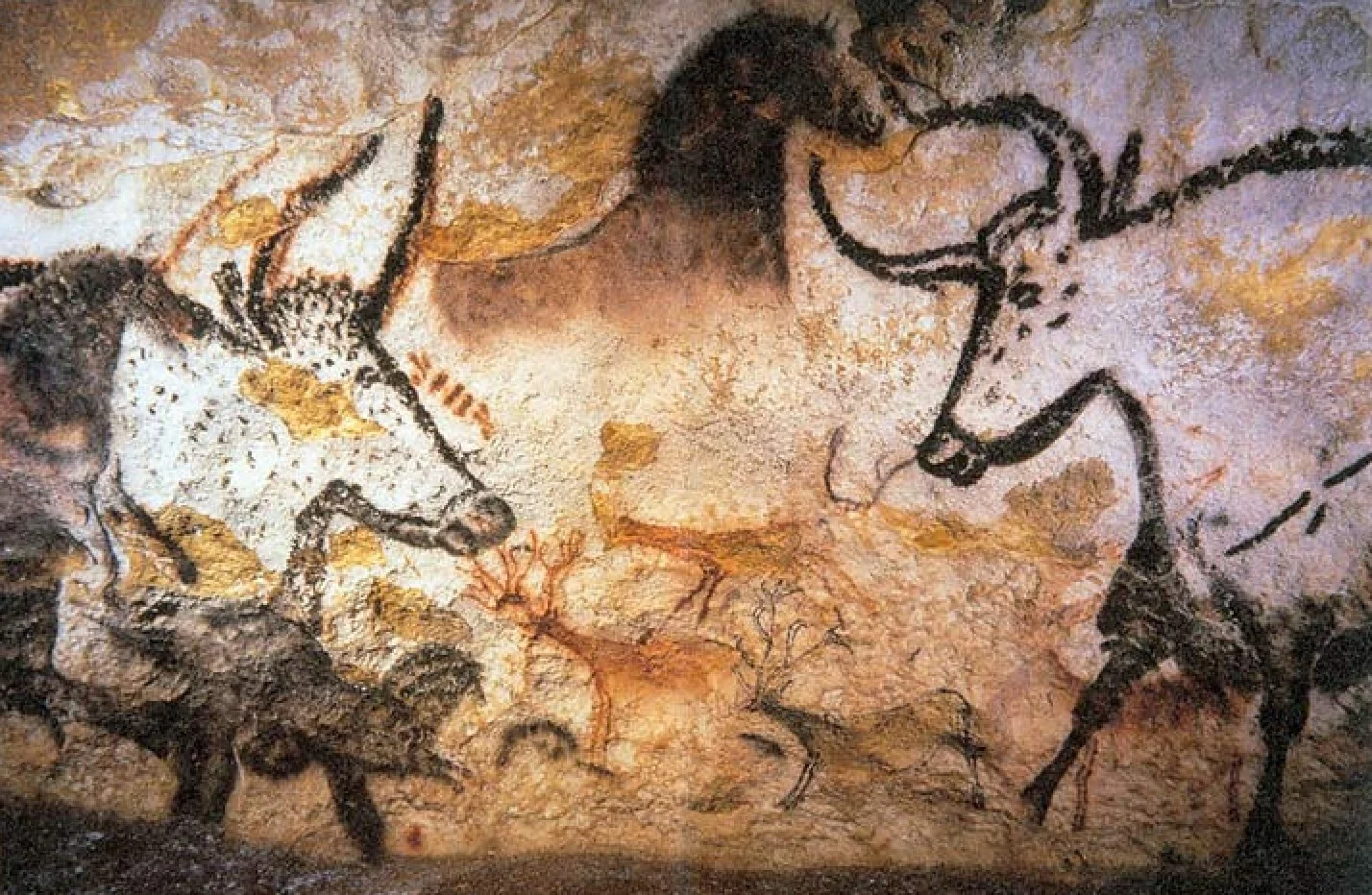
By EU - Own work, Public Domain, https://commons.wikimedia.org/w/index.php?curid=2846254
Google defines the Art World as a complex network of individuals and institutions—artists, galleries, museums, collectors, and critics—interacting across overlapping spheres. It is not a monolith but an ecosystem with different values and hierarchies depending on whether you’re dealing with academia, exhibitions, or the marketplace. Under this definition, most of us working artists are firmly embedded in the Art World. We exhibit, we produce, we participate. But the true global Art Market is something else entirely.
In reality, the Art Market is small, centralized, and astonishingly selective. Eighty-two percent of sales occur in the United States, the United Kingdom, and China, and more specifically, in three cities: New York, London, and Hong Kong. Opportunity is global, but the gatekeeping is geographically microscopic.
Museum access is even tighter.
A 2015 study by The Art Newspaper found that 30% of major U.S. solo museum shows came from artists represented by only five mega-galleries: Gagosian, Pace, Marian Goodman, David Zwirner, and Hauser & Wirth. The illusion of an open field disappears once you recognize how concentrated museum pipelines are. A small number of galleries determine which artists are elevated, which careers are validated, and which works become part of cultural memory.
This creates a functional monopoly—not only over commercial opportunity, but over cultural heritage itself. When influence consolidates, cultural narratives consolidate with it. And when money becomes the primary driver, art risks becoming a commodity first and a contribution to civilization second. Paintings increasingly function like real estate or securities. If a Klimt sells for $236.4 million, it isn’t being hung over anyone’s fireplace; it’s being stored, insured, and treated as an appreciating asset held by investors.
As the market shifts toward financialization, the ecosystem around it shifts too. There are roughly 500 members in the American chapter of the International Association of Art Critics (AICA-USA). But a securities market does not require critics; it requires appraisers. It requires valuation, not interpretation. And what does that mean for artists? It means the target has changed. It means most galleries, especially mid-tier ones, struggle to compete. It means the Art Market’s priorities increasingly diverge from those of artists who are trying to create something meaningful rather than something merely tradable.
And this brings us to why artists must define their purpose clearly—because markets shift, but culture endures. Our responsibility is not to chase valuation, but to create work that speaks to human experience and to find the patrons, collectors, and supporters who allow that work to continue. Financial support is not a contradiction to artistic integrity; it is the infrastructure that makes serious work possible. Without it, there is no sustained practice, no long-term exploration, and no legacy that survives the present moment.
Which leads to the real point—the part that matters.
The best example of what artists contribute to civilization is still found deep underground in the caves of Lascaux. Those paintings were created without markets, without galleries, and without institutions. They were made because early humans needed to express something profound about existence. They are spellbinding not because they are old, but because they are true. Thousands of years later, they continue to mesmerize and remind us what humanity is capable of creating when the intention is pure and the vision is unfiltered.
We, too, will have to find our own “caves”—which in our era means patronage, collectors, and sustainable careers—not because art should be commercial, but because practice requires support. Once we find those caves, we must deliver work worthy of them. The duty remains the same: to create culture, to inspire civilization, and to leave behind something that proves we were here and that we understood what it meant to be human.